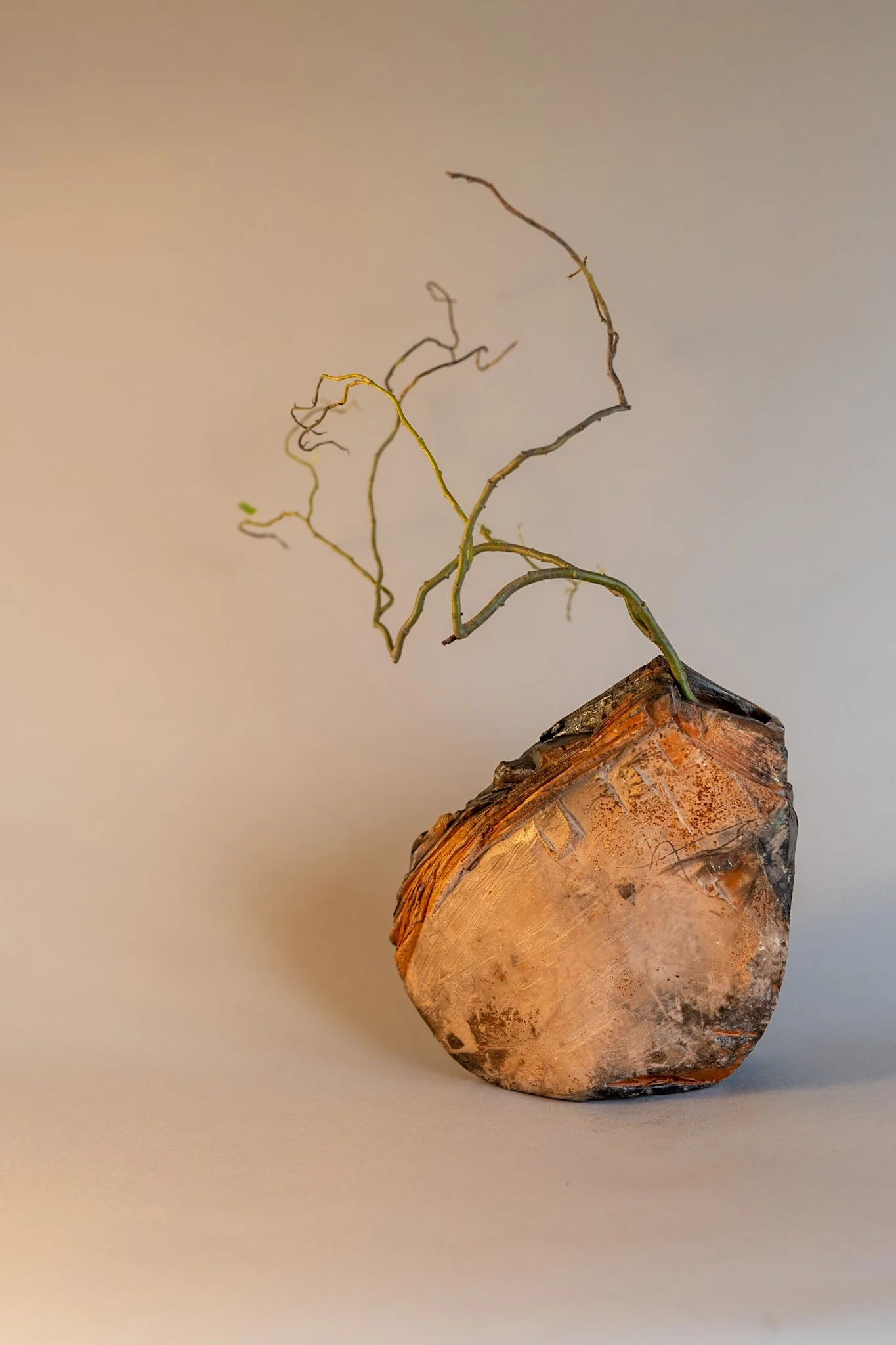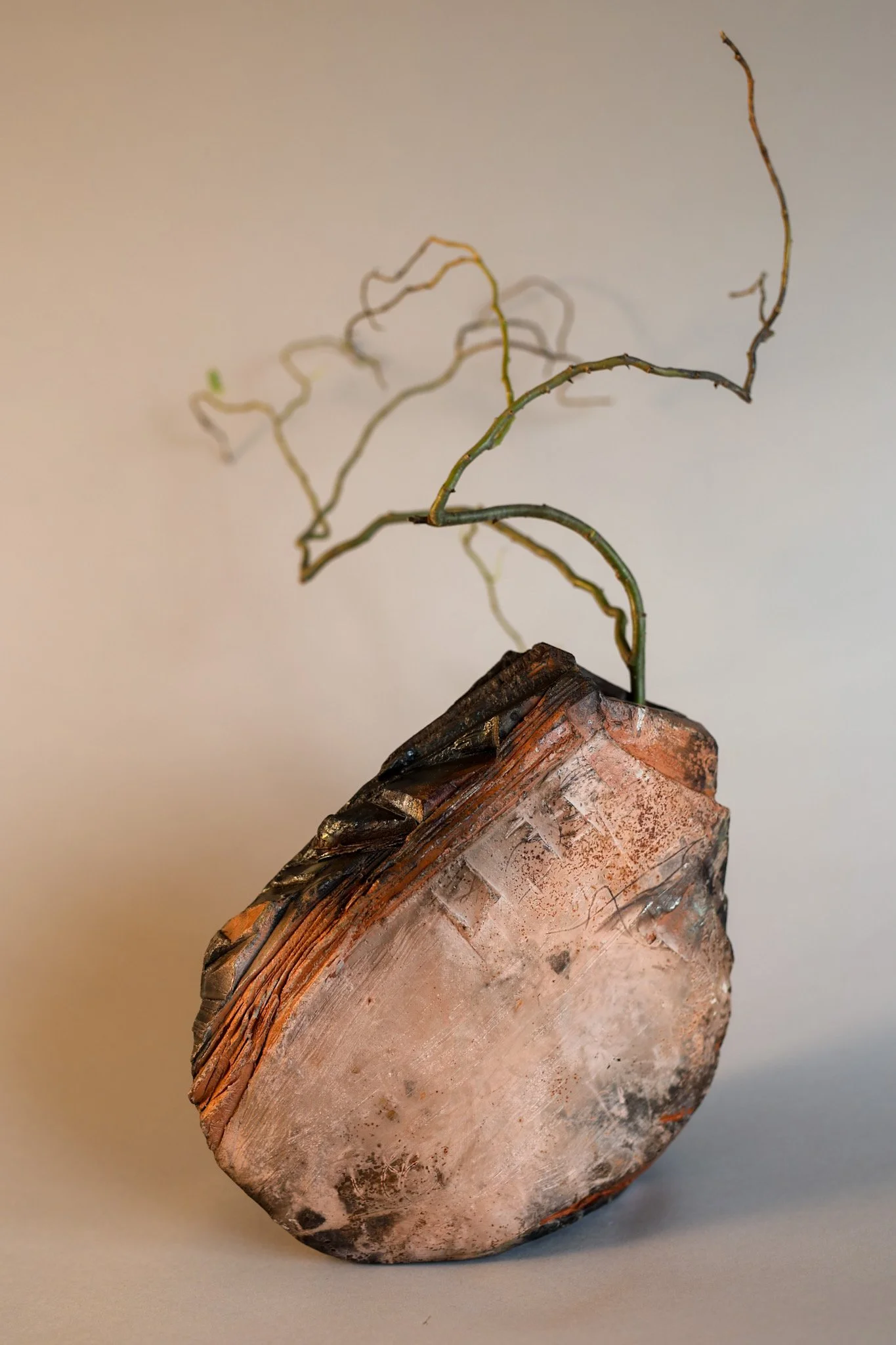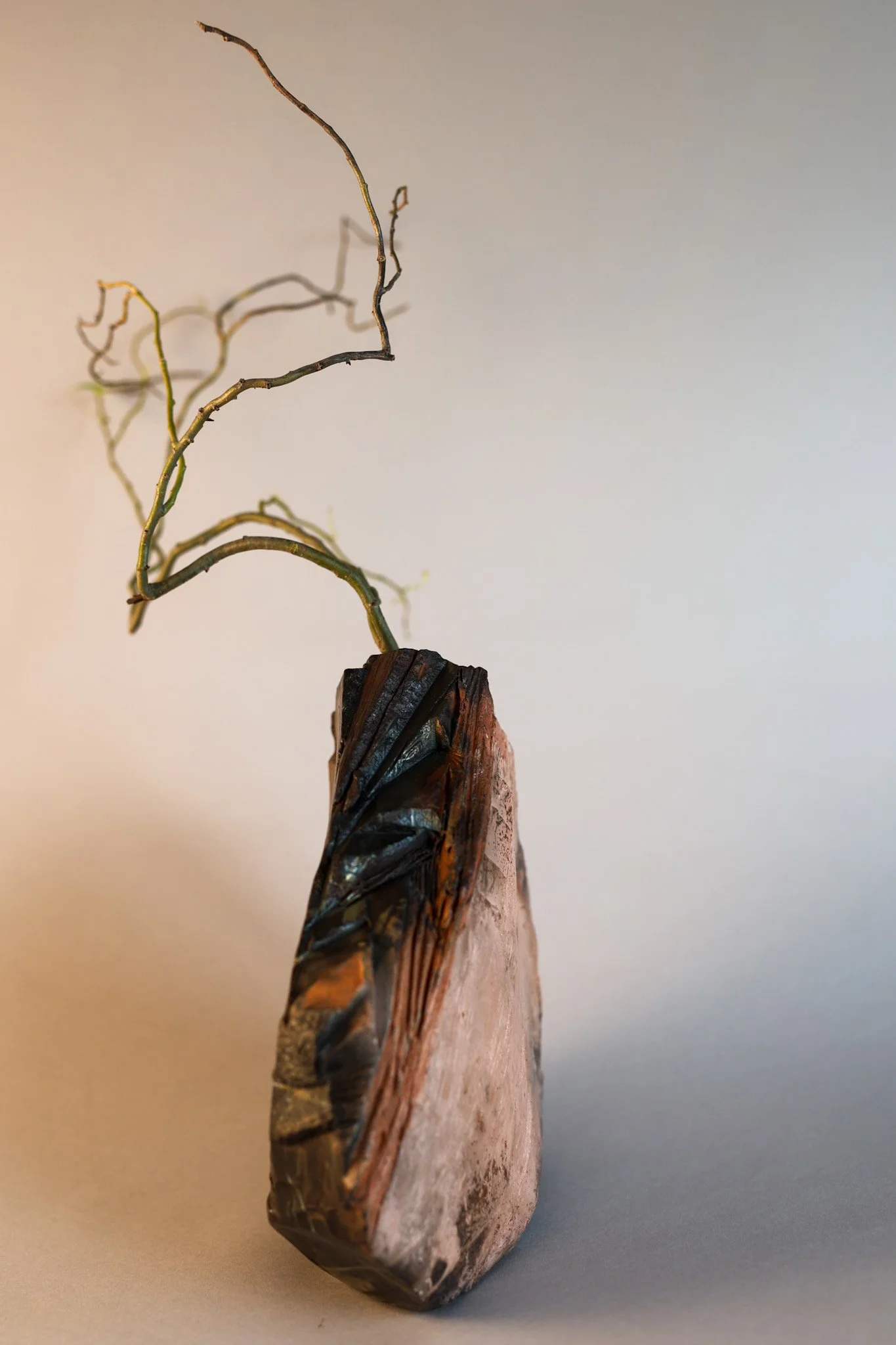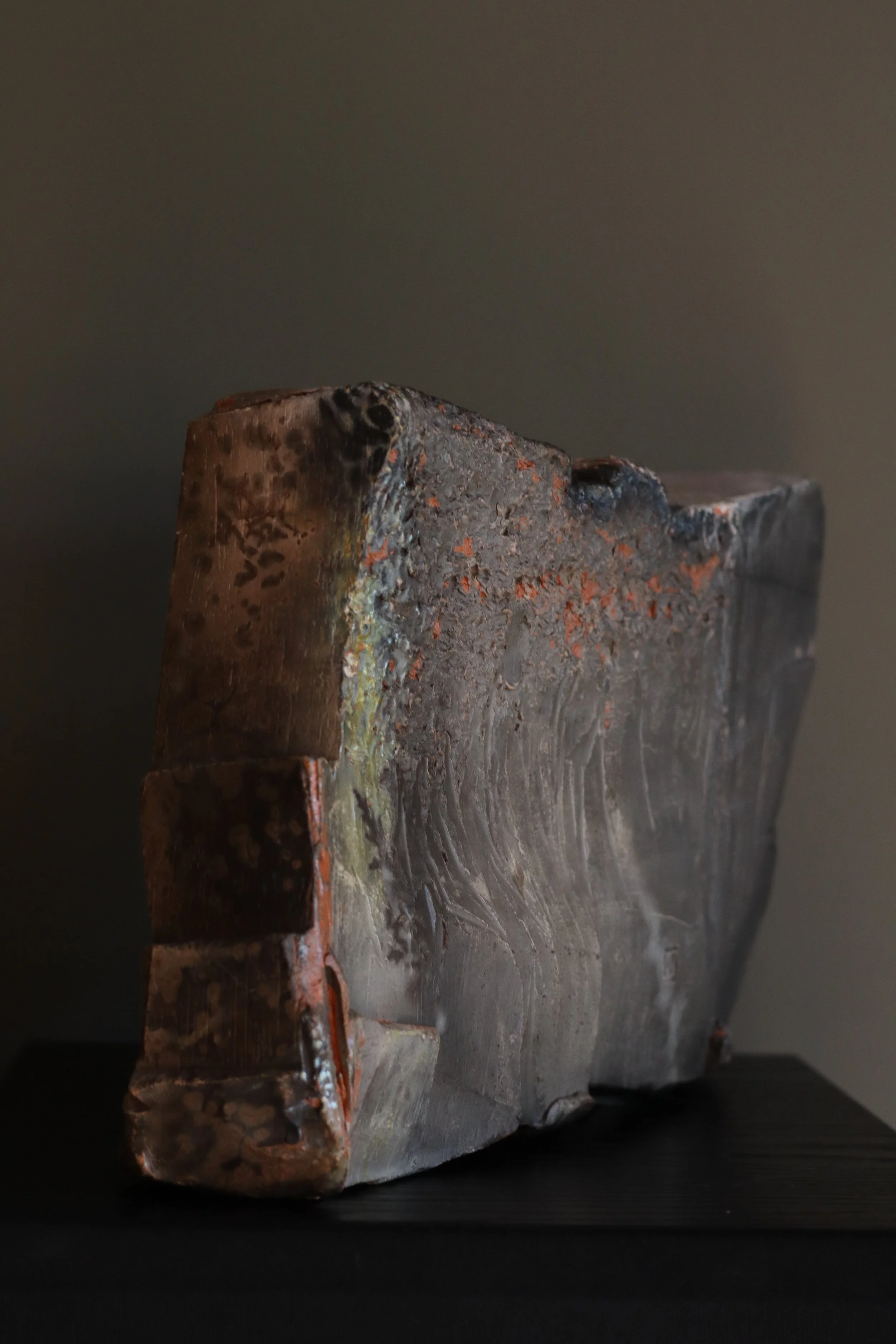
Reconciliation
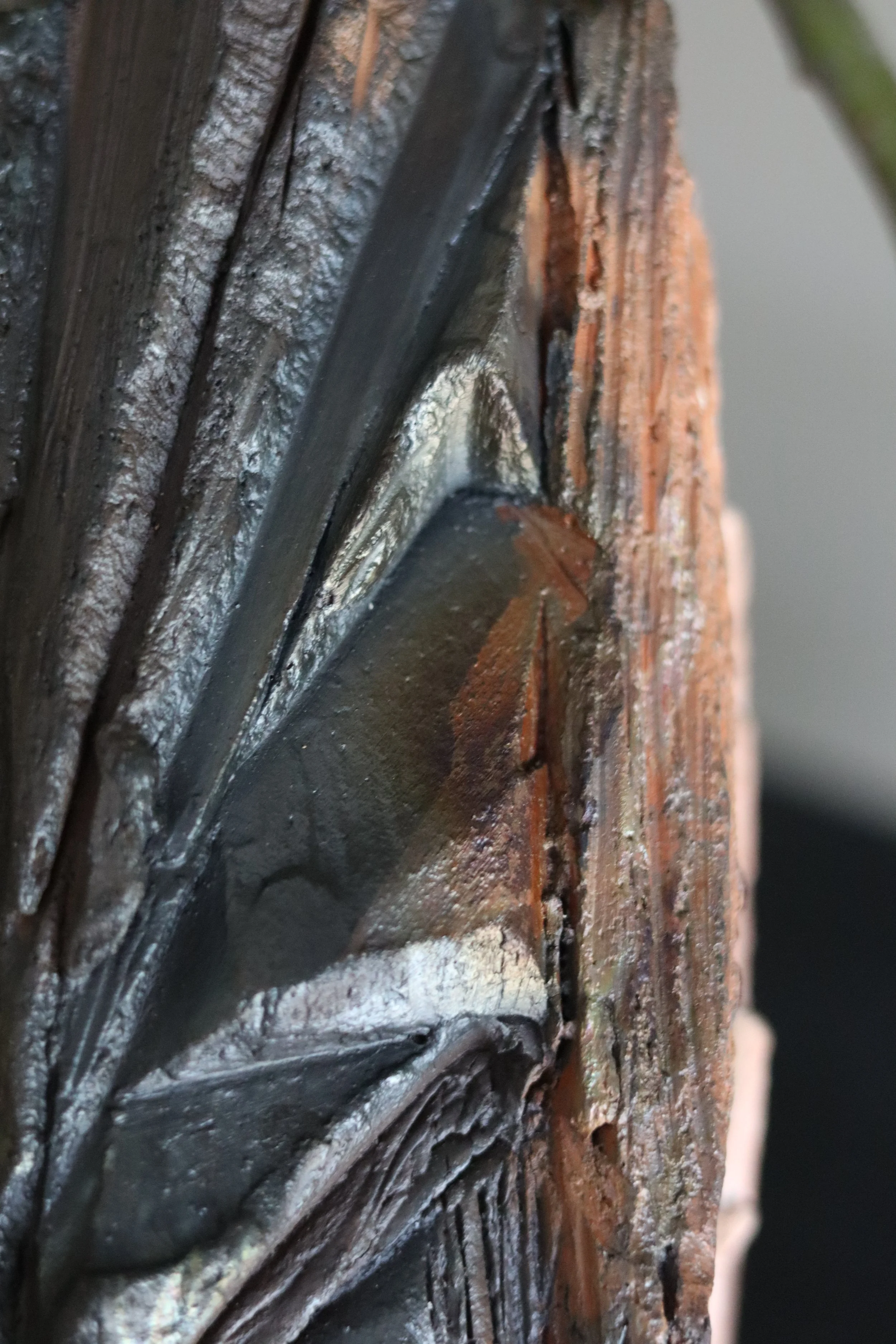
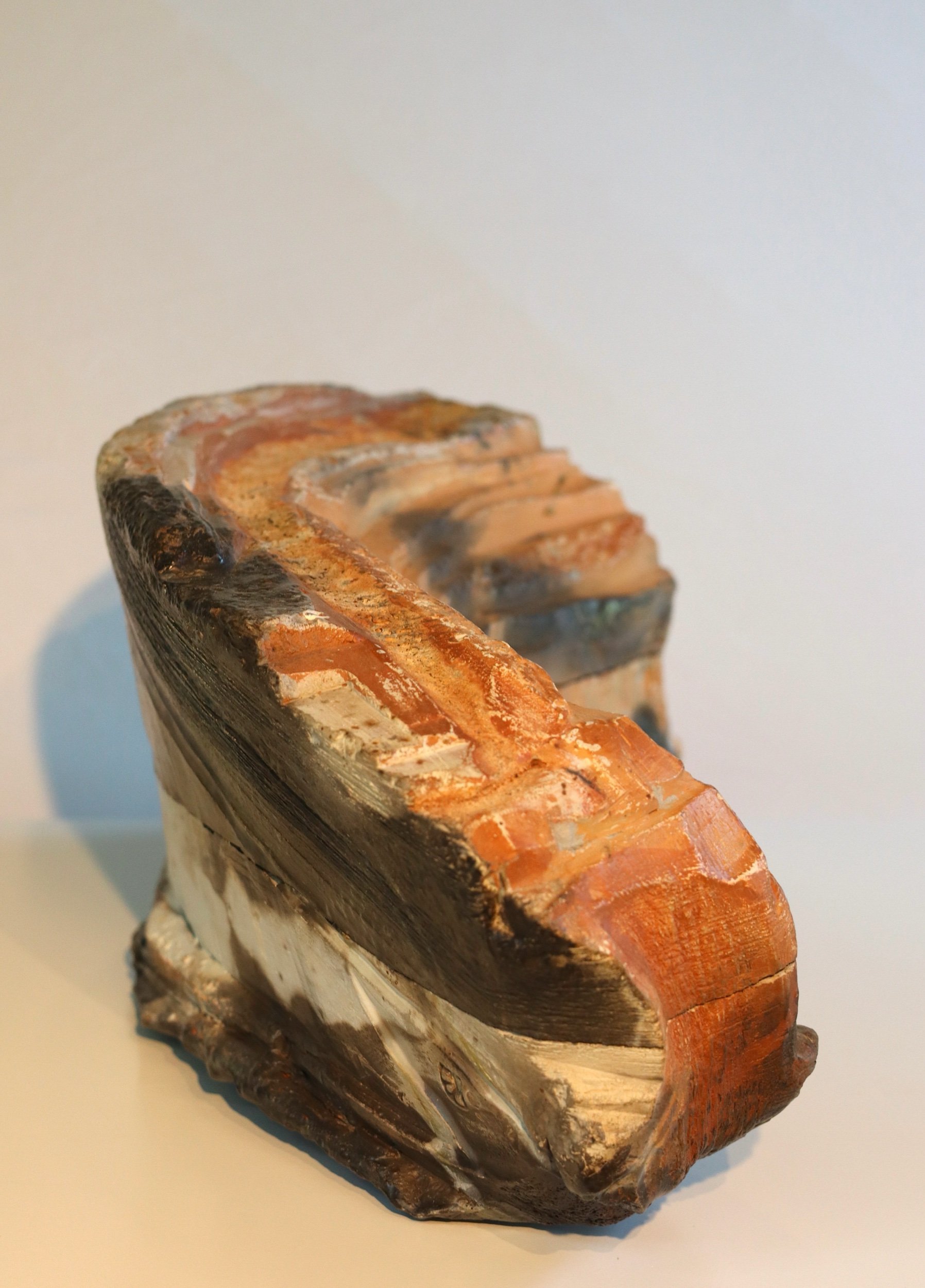
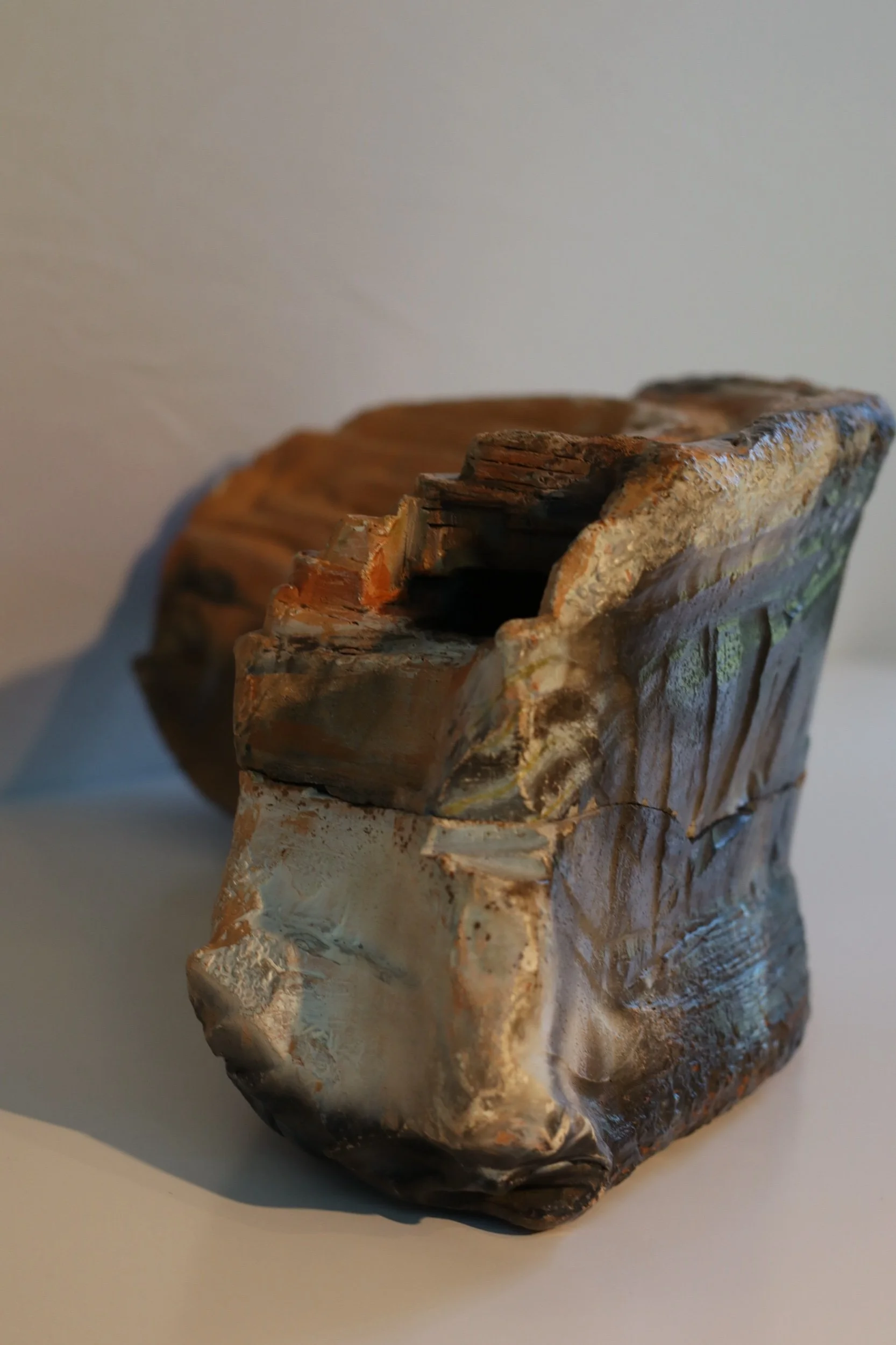
Smoke-fired Raku clay; Wild foraged clay for Terra Sigillatas; Invasive plant materials; Found and discarded metals and minerals.
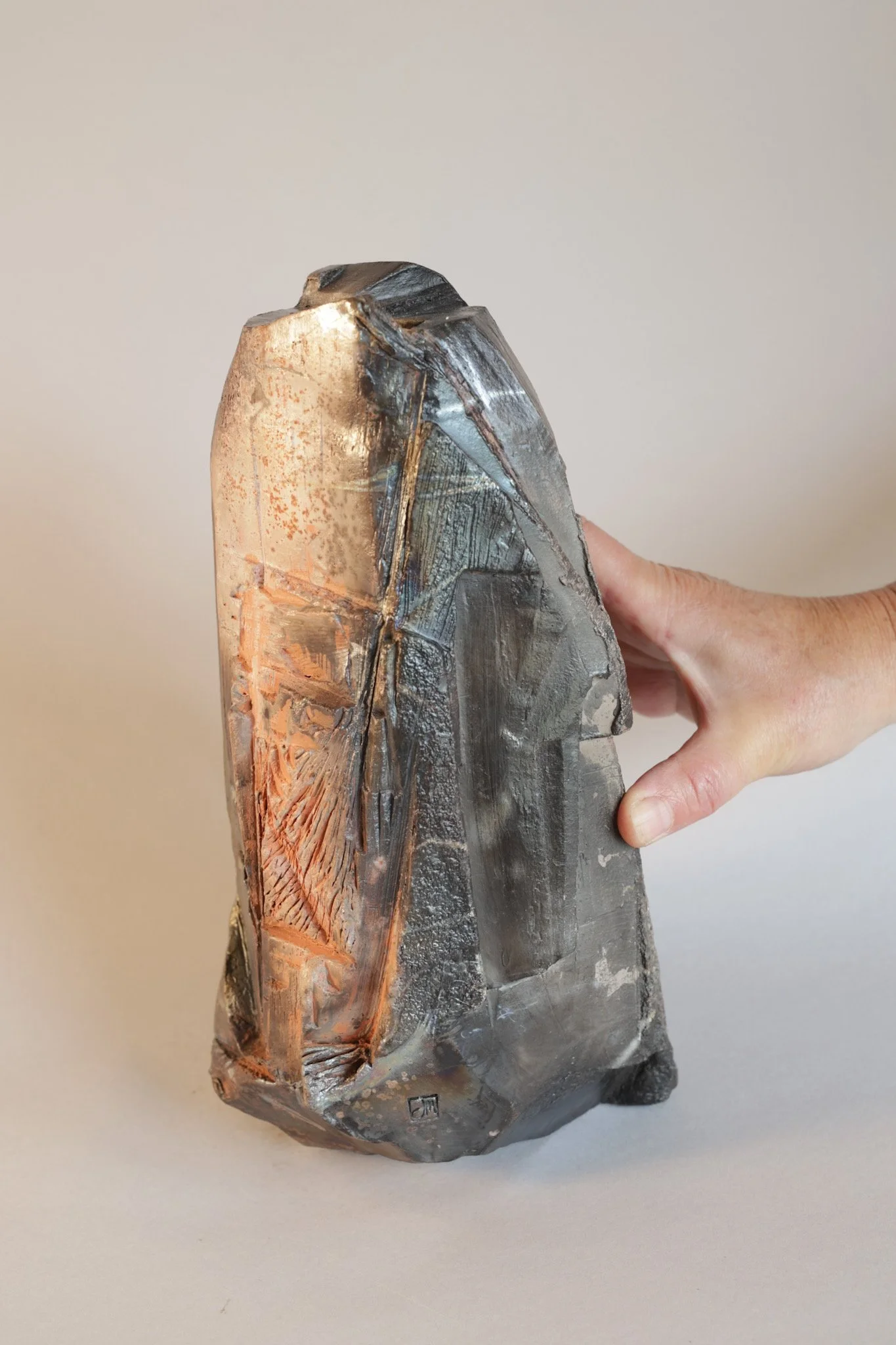
22”L x 7”H x 7”W
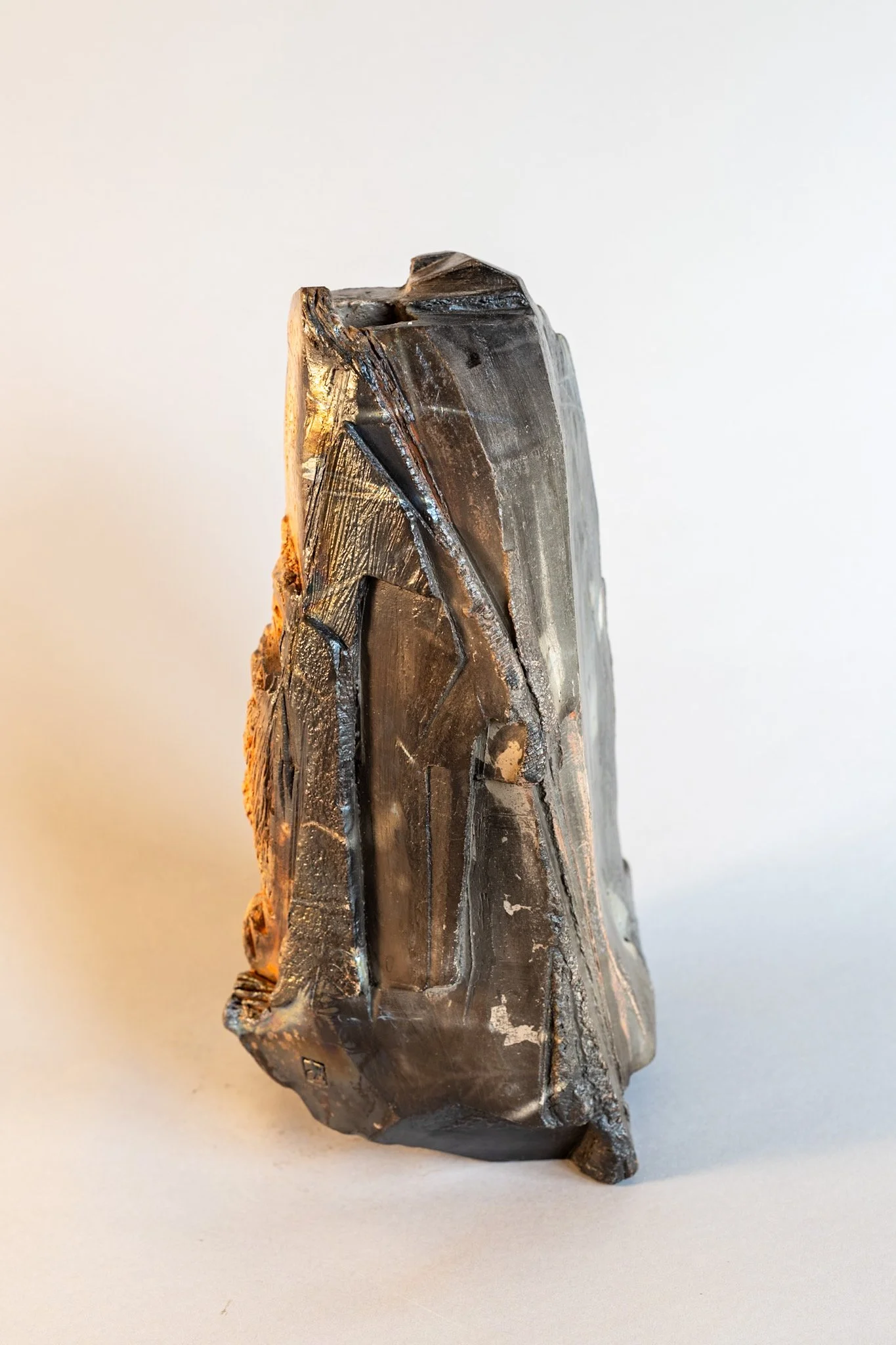
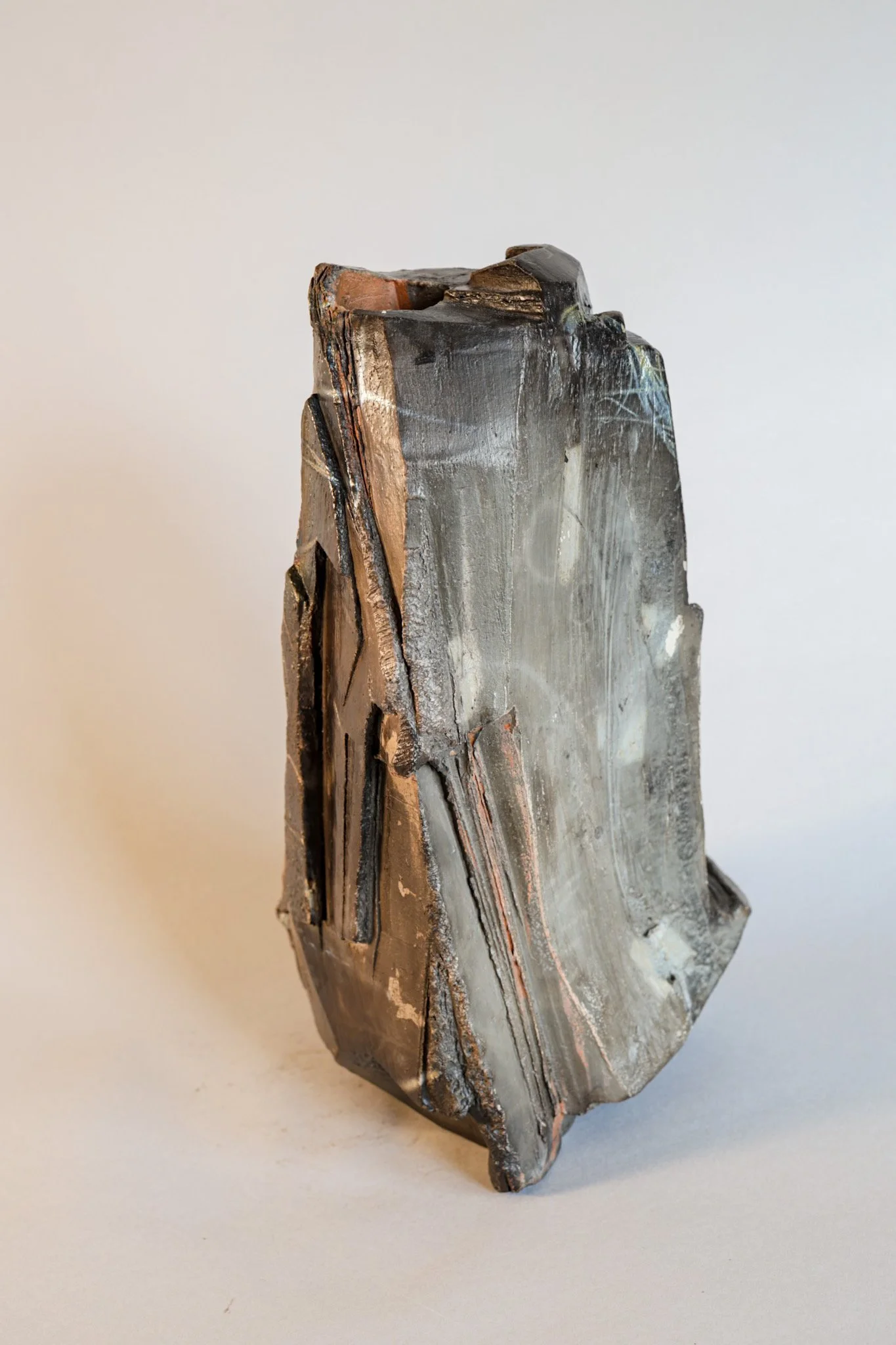
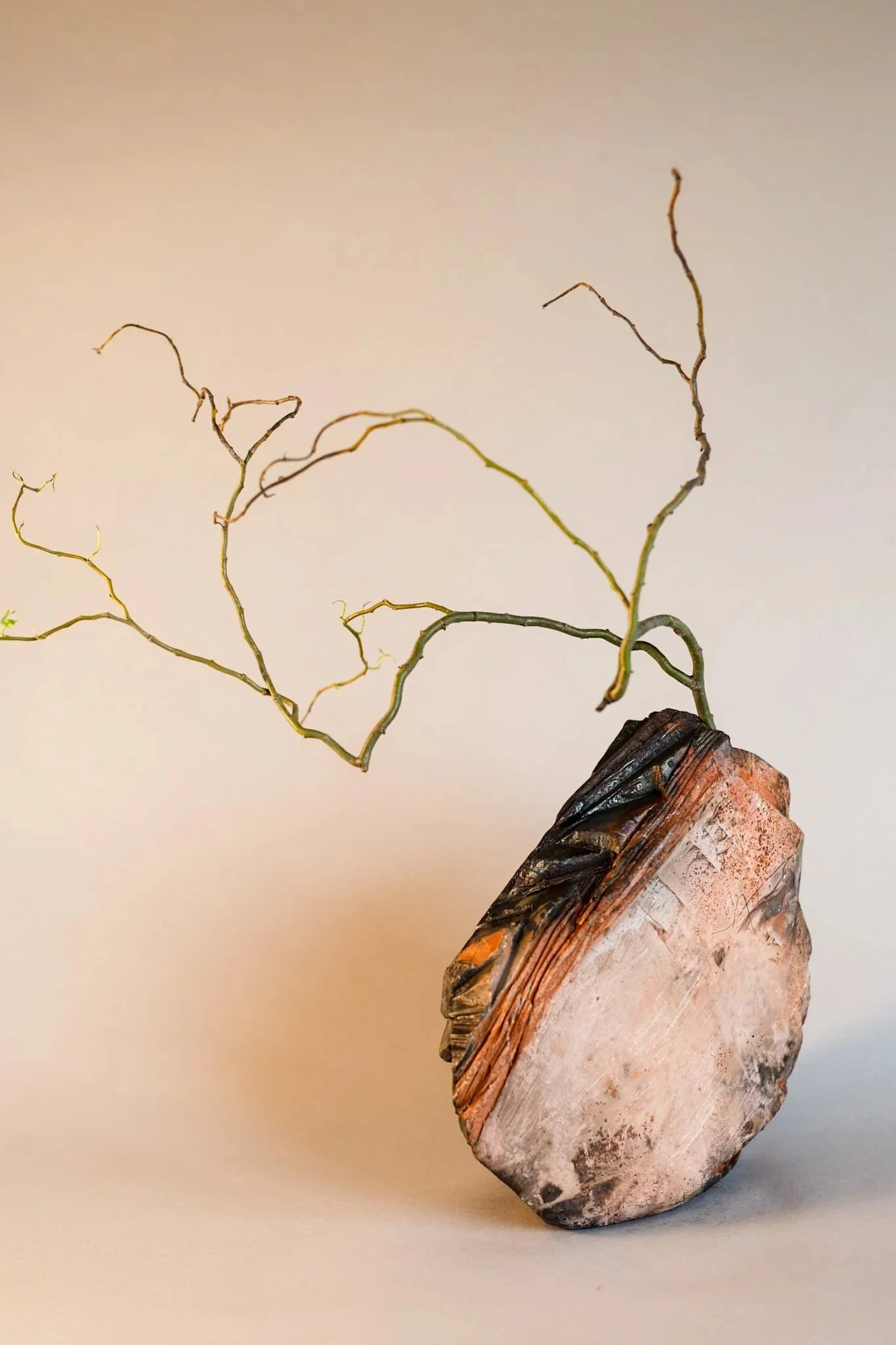
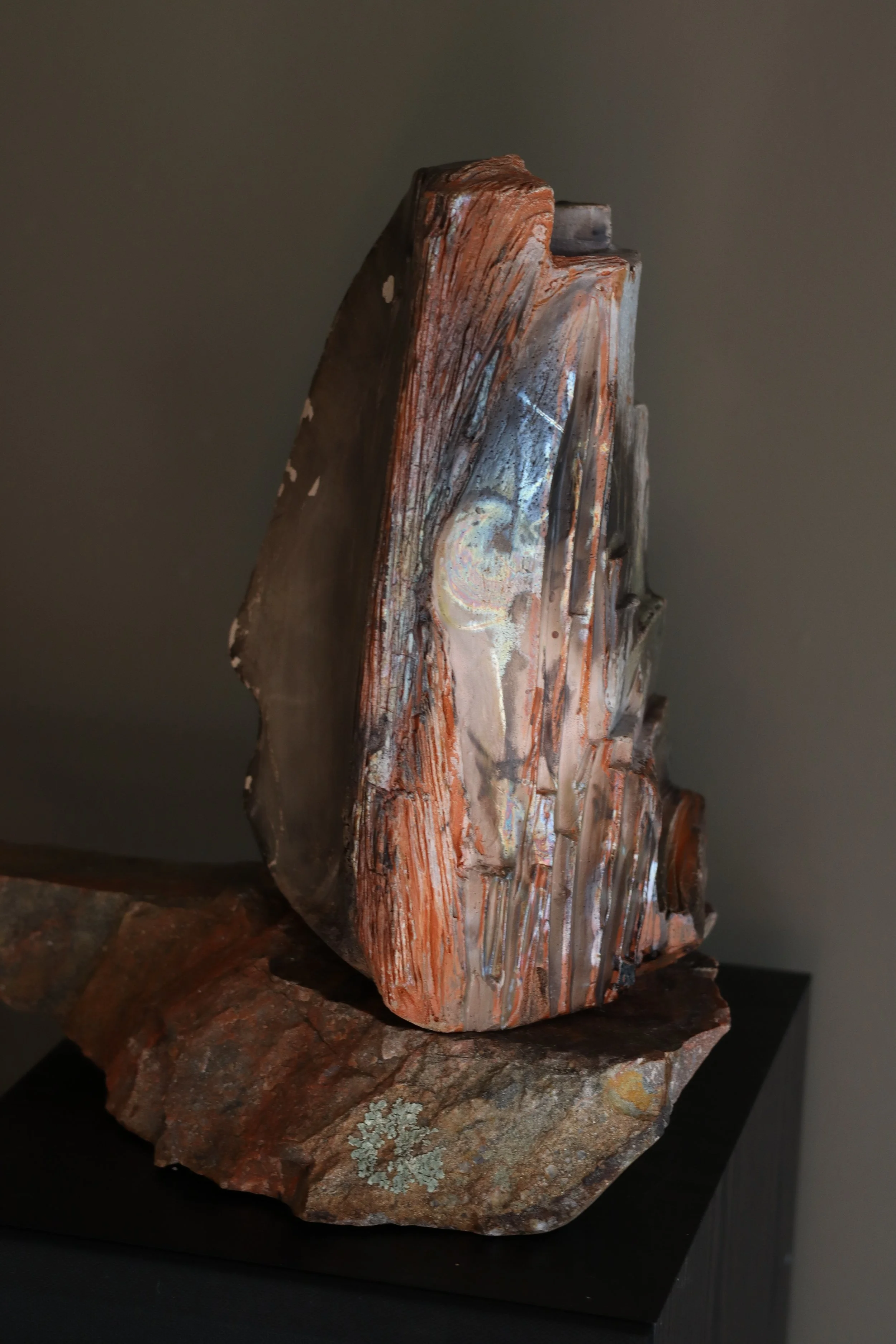
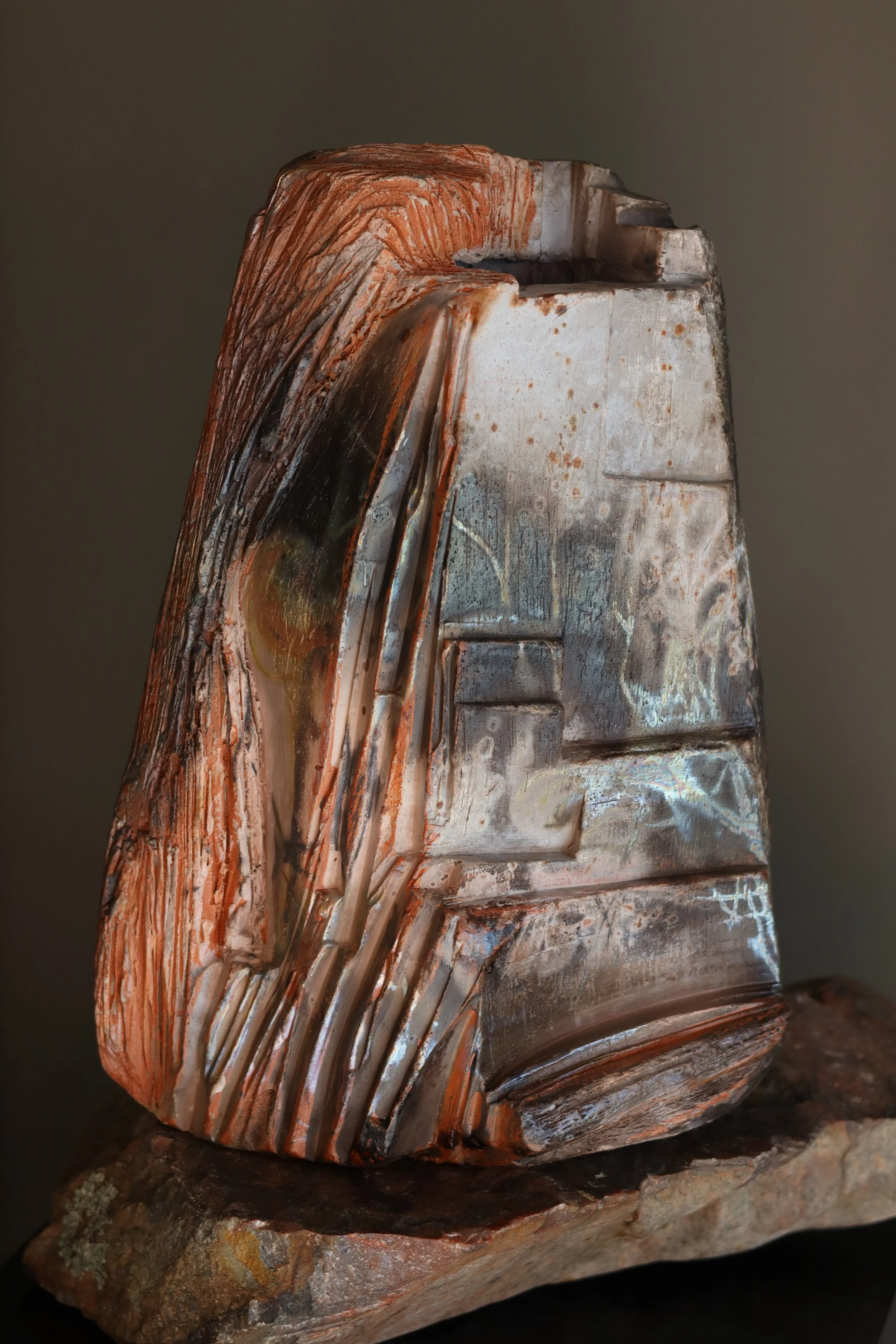
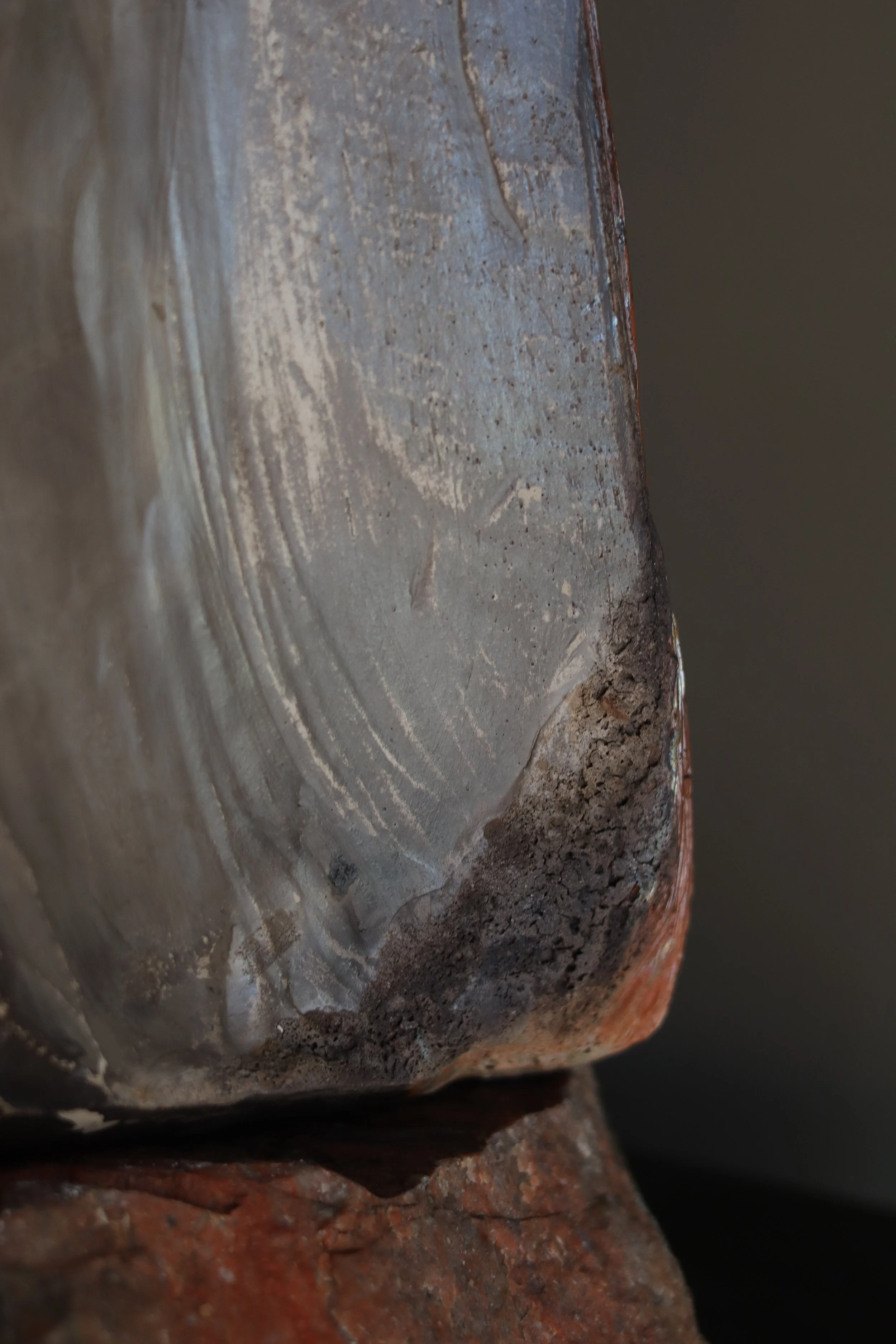
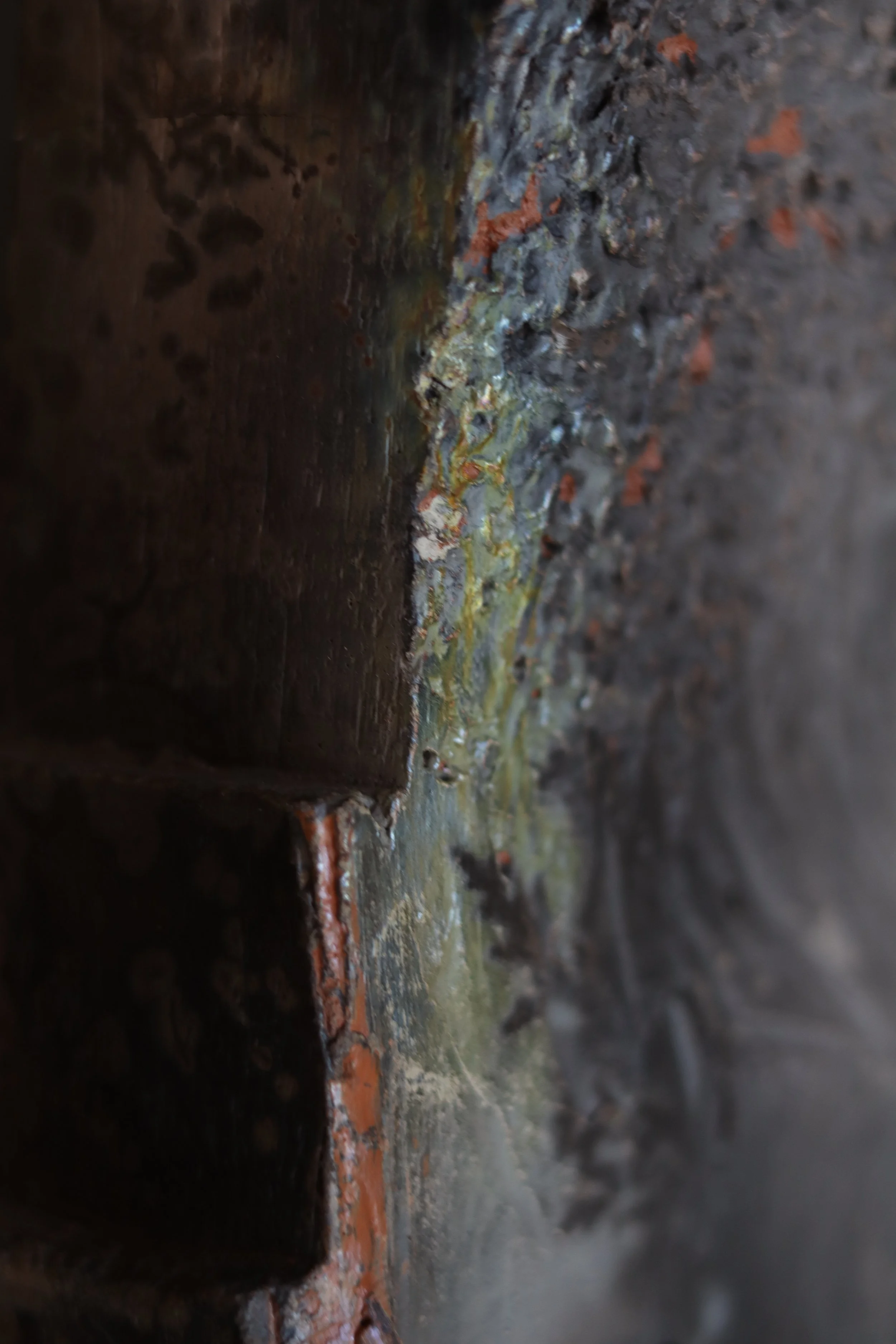
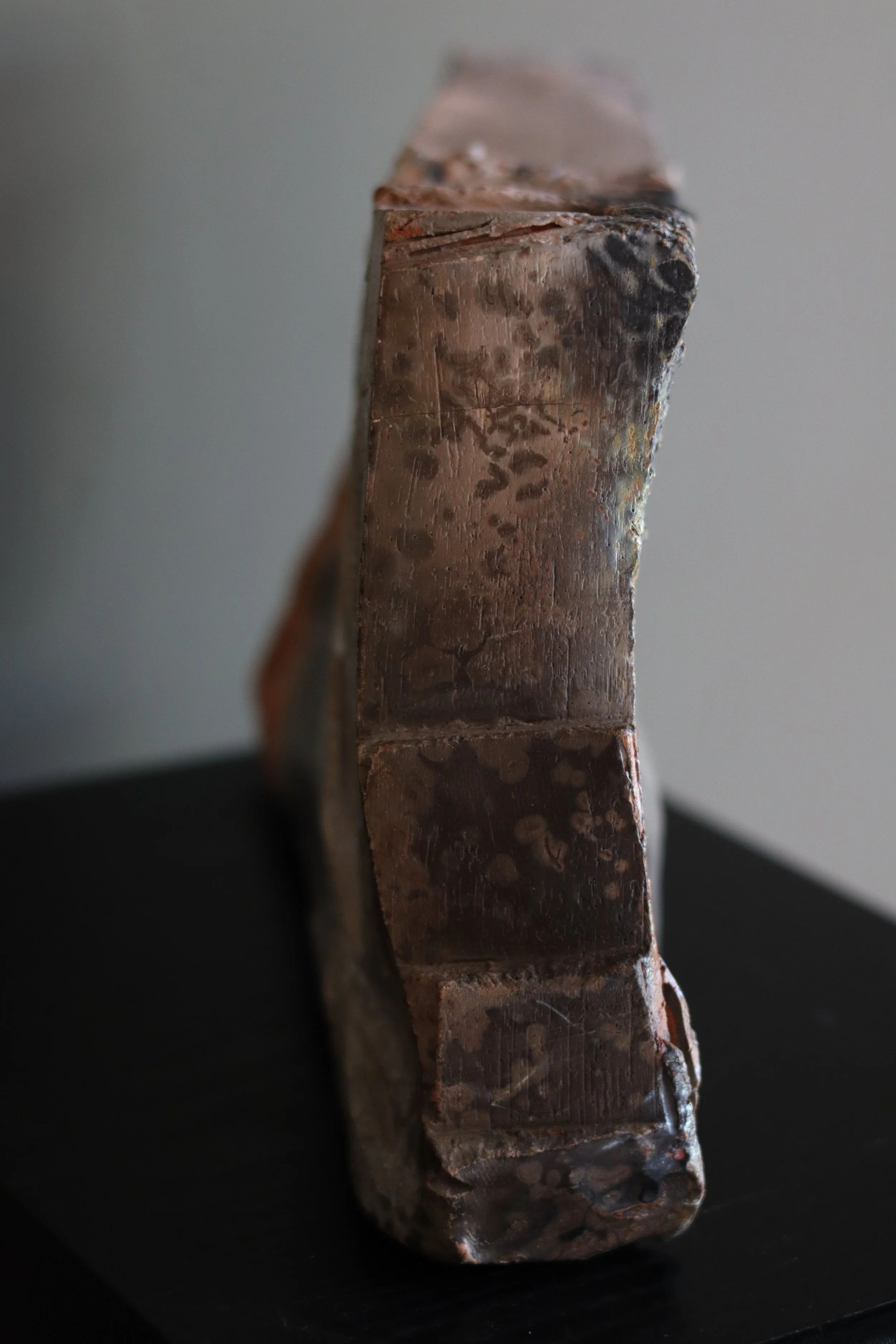
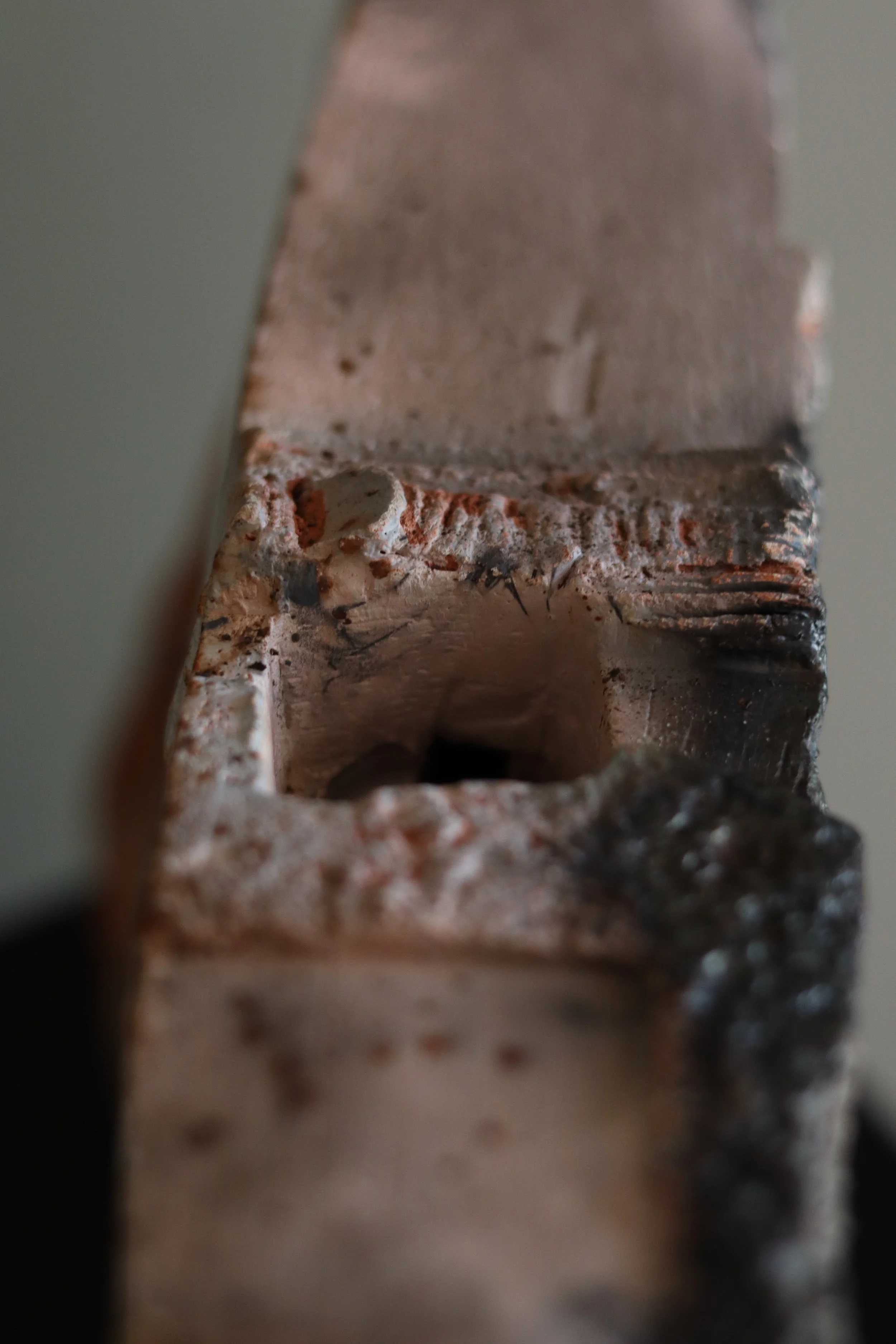
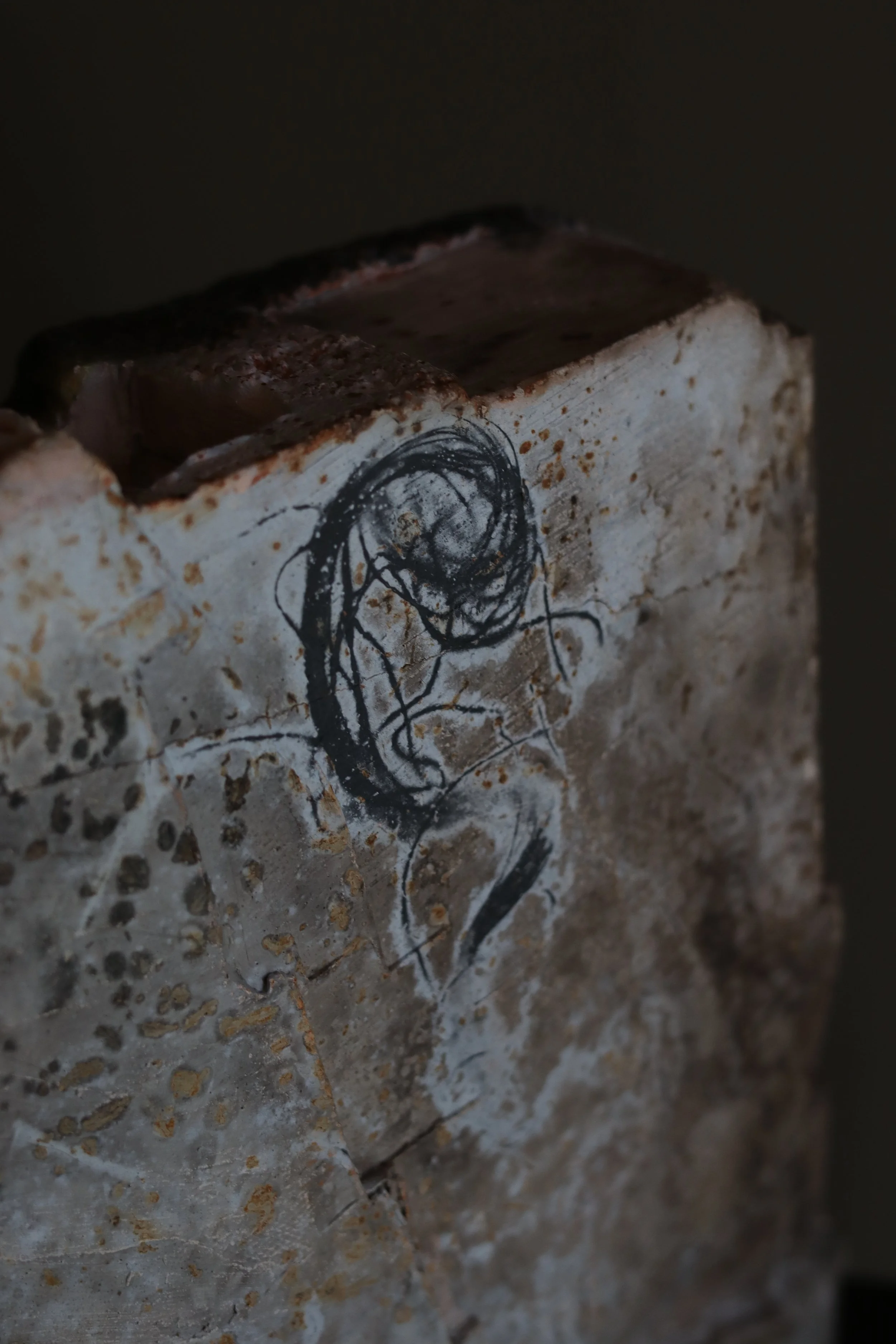
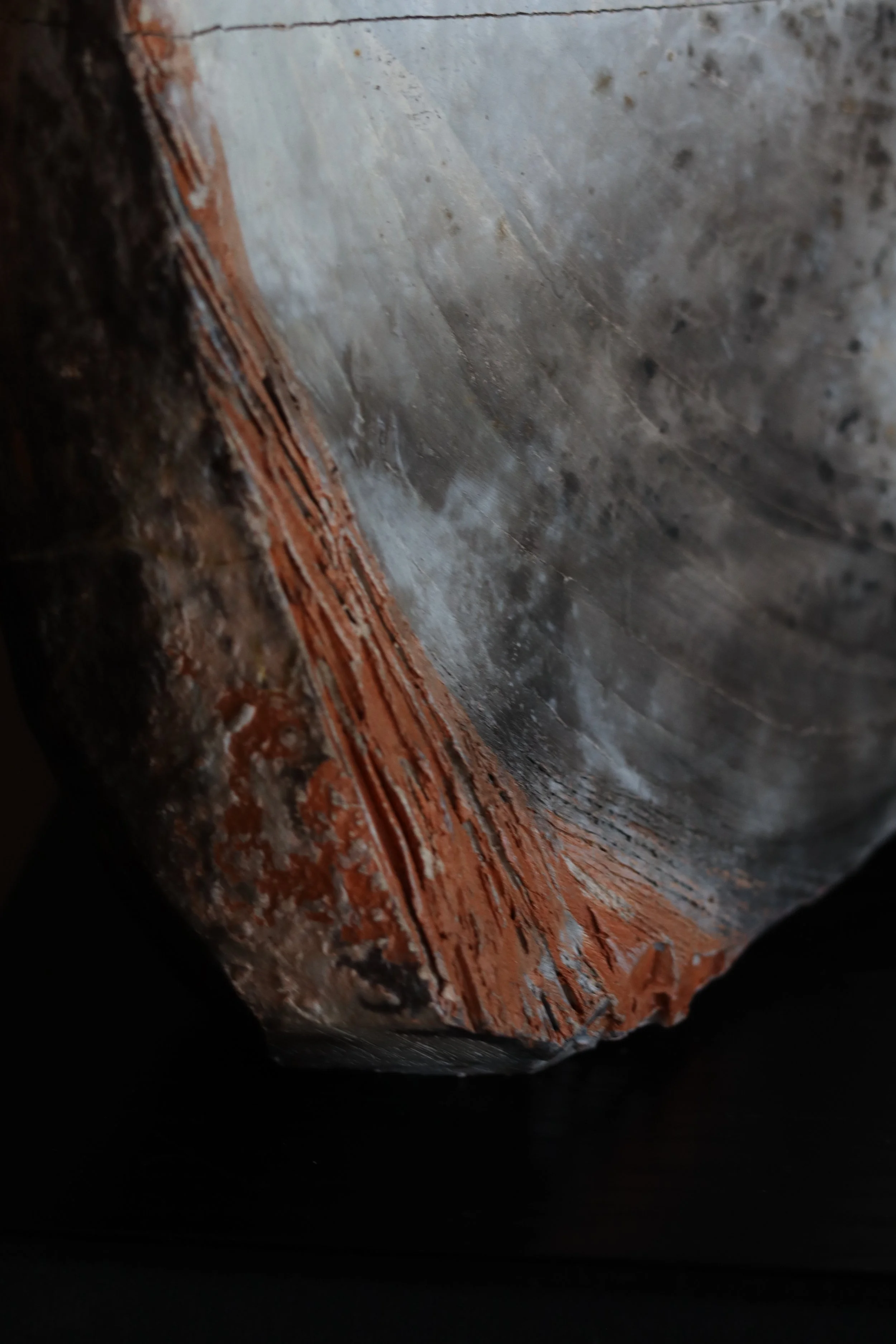
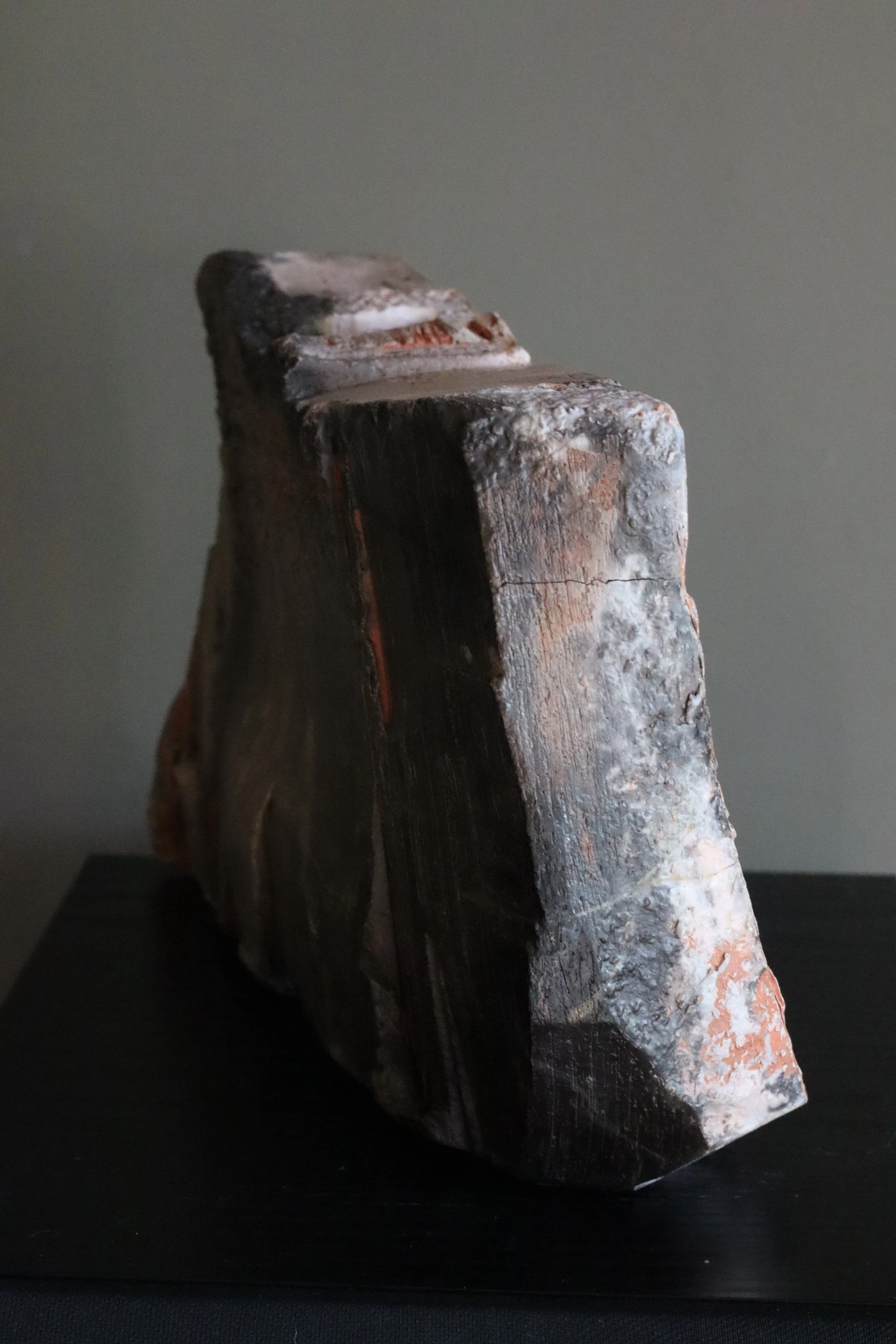
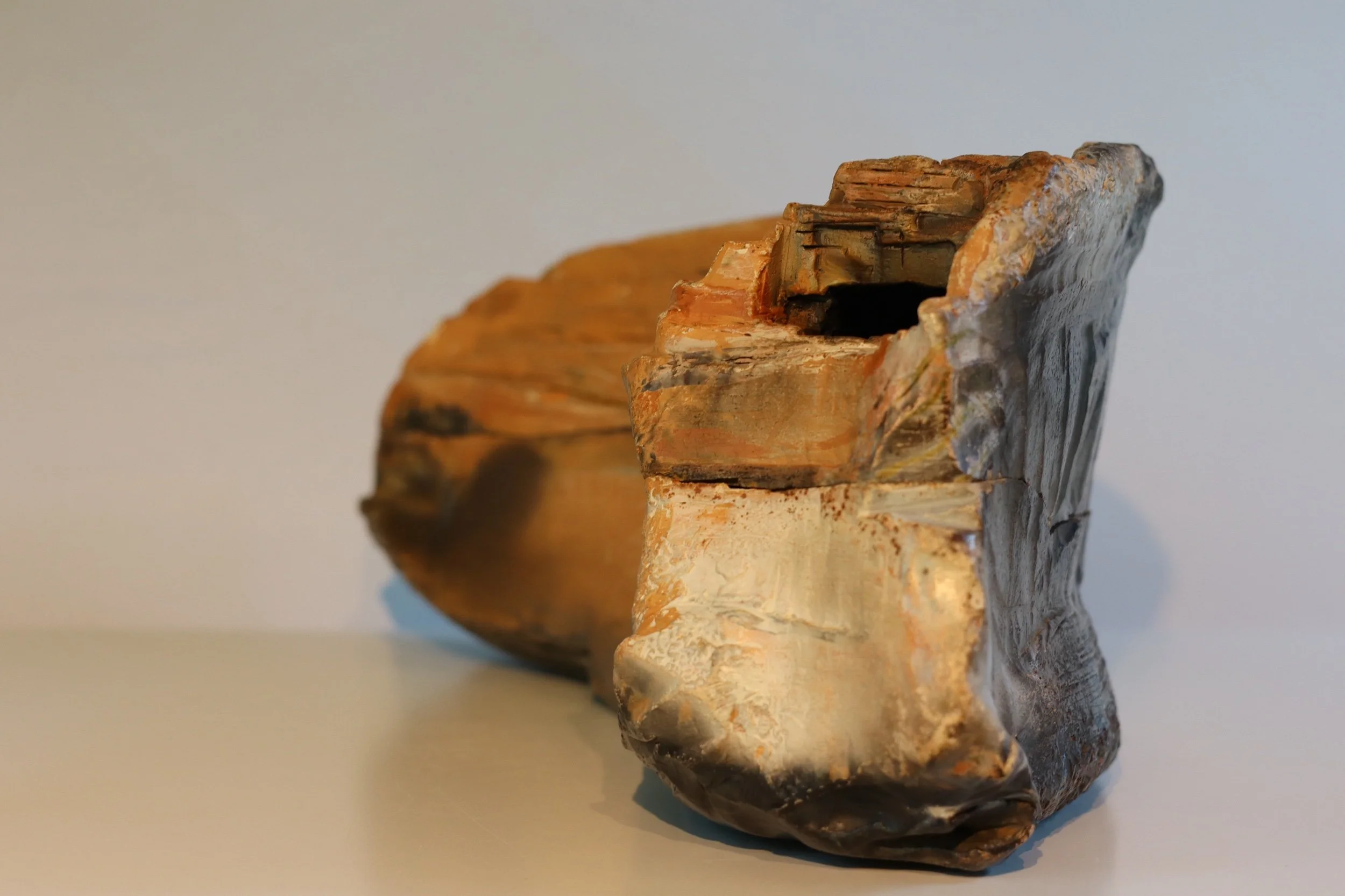
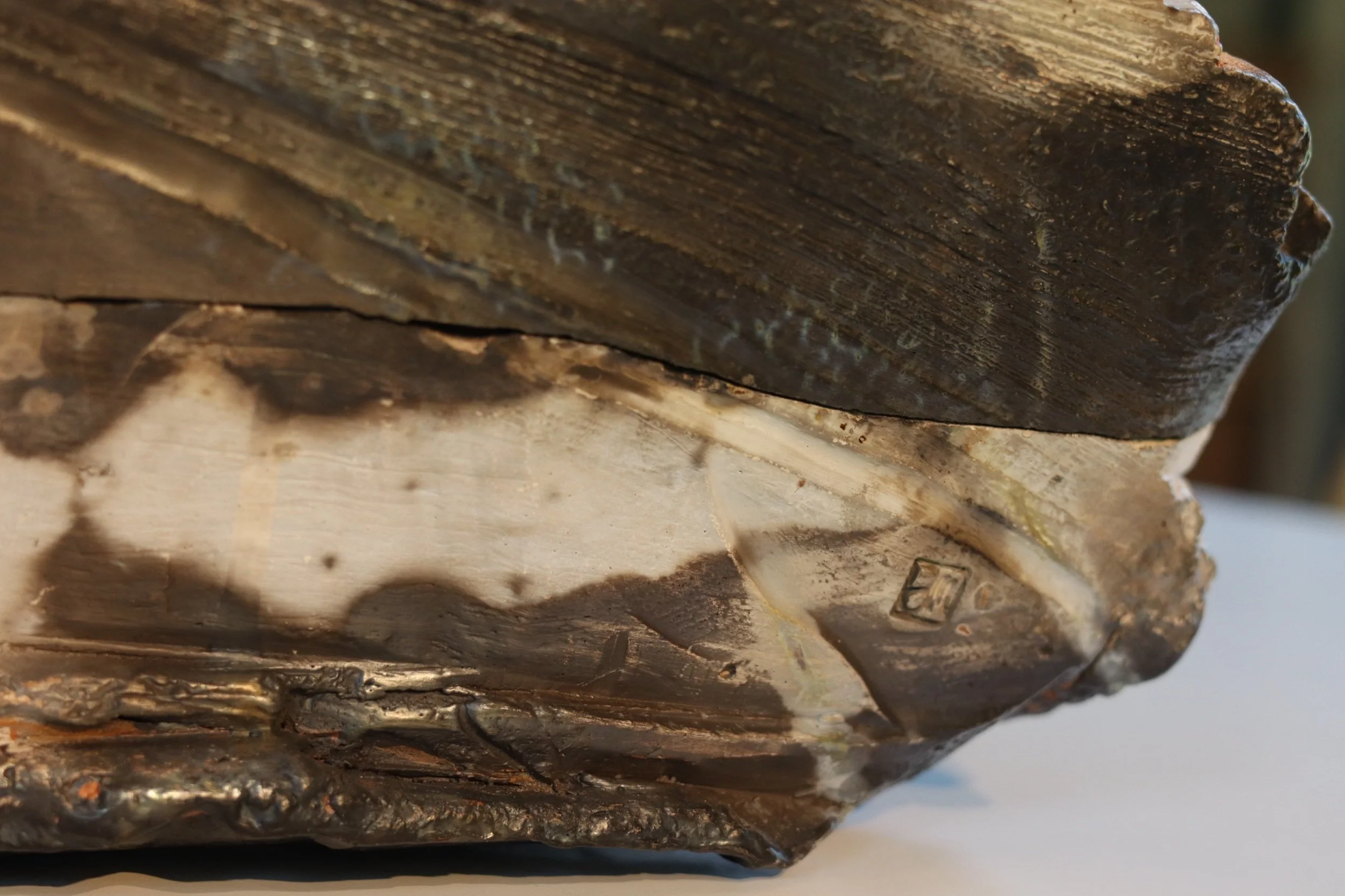
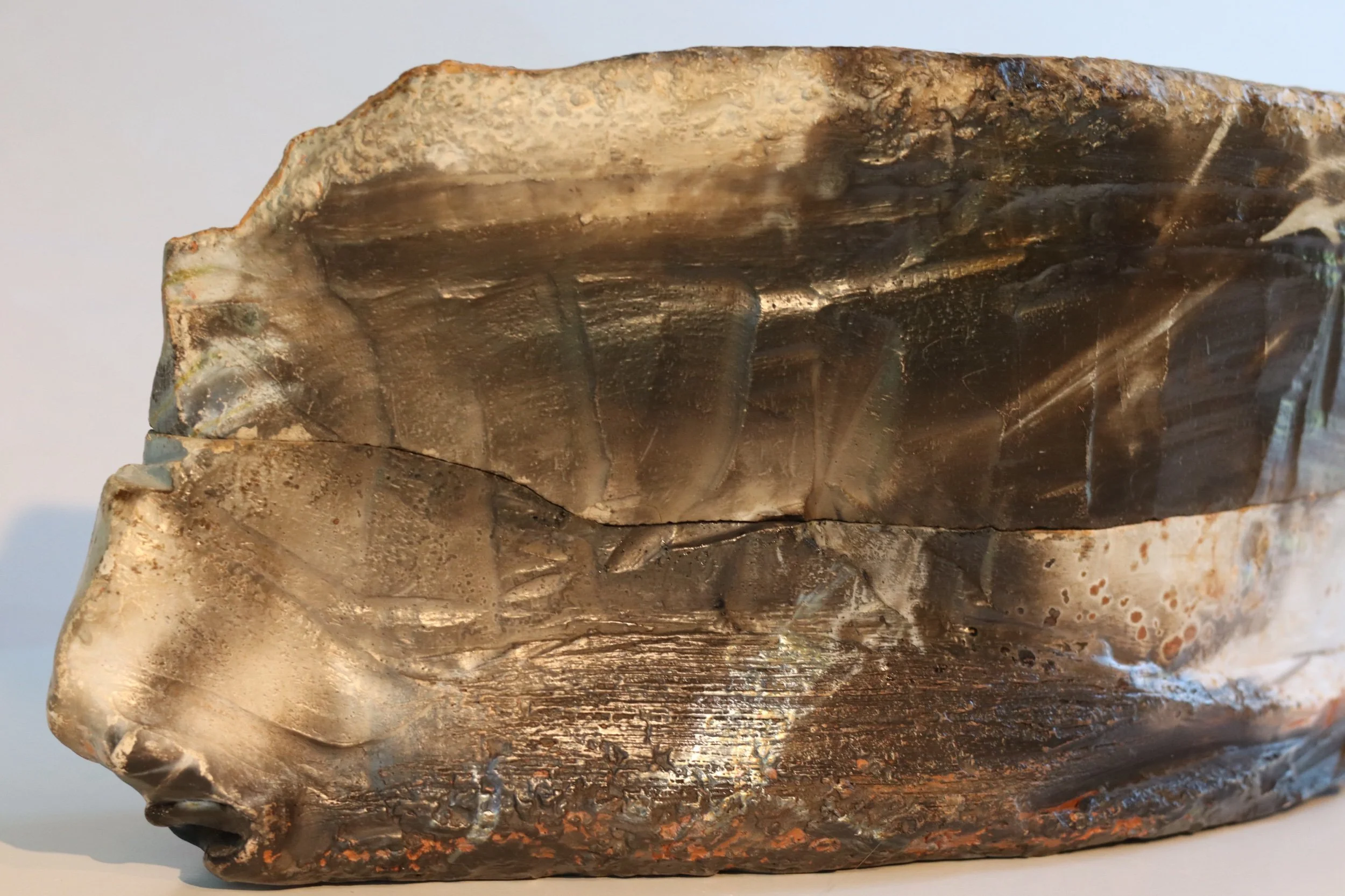
This vessel carries the memory of place.
Its surface holds wild clays I personally harvested by canoe along the Yukon River, alongside clay gifted to me by Indigenous leaders of The Long Ago People’s Place—an honour I hold with profound gratitude and humility.
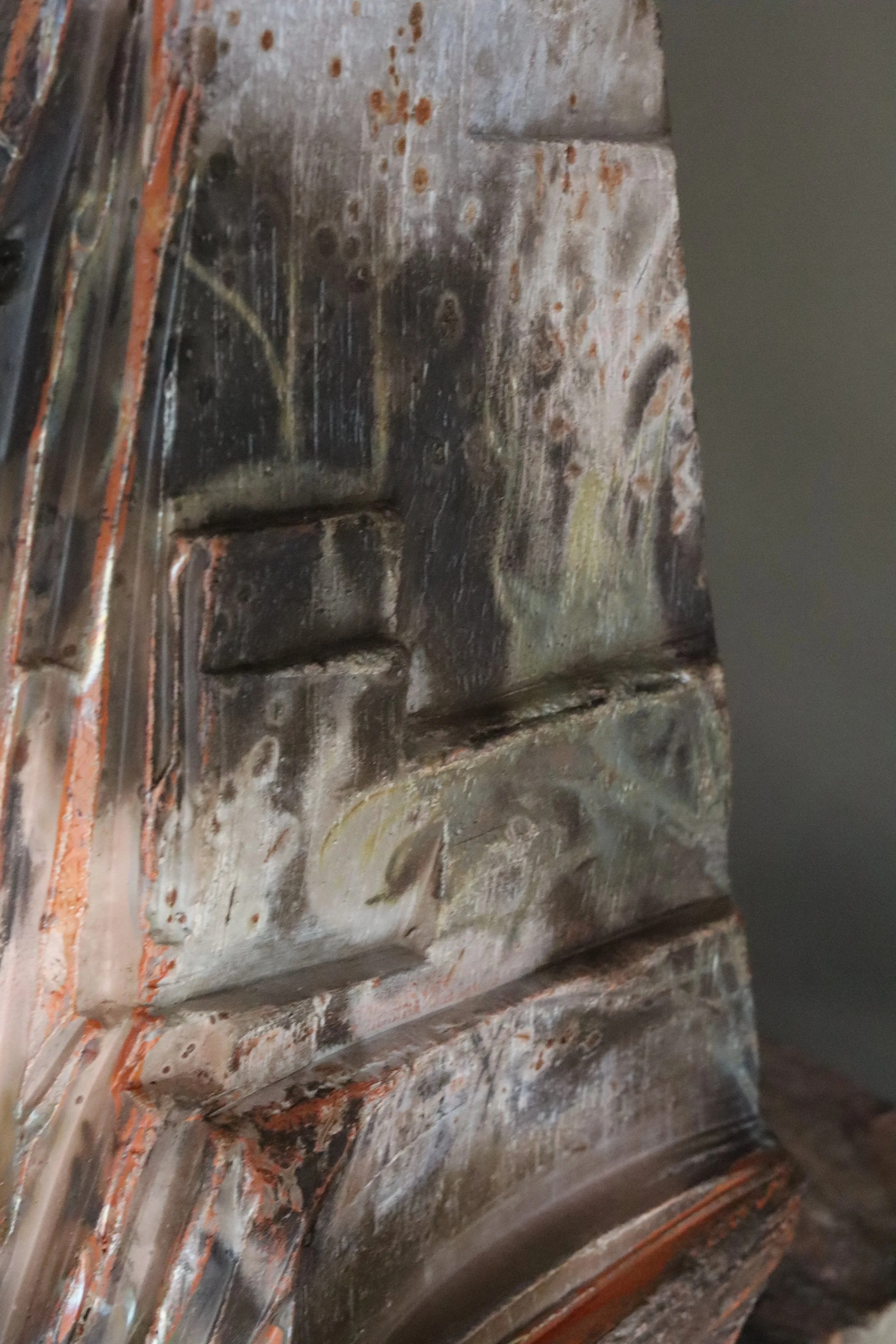
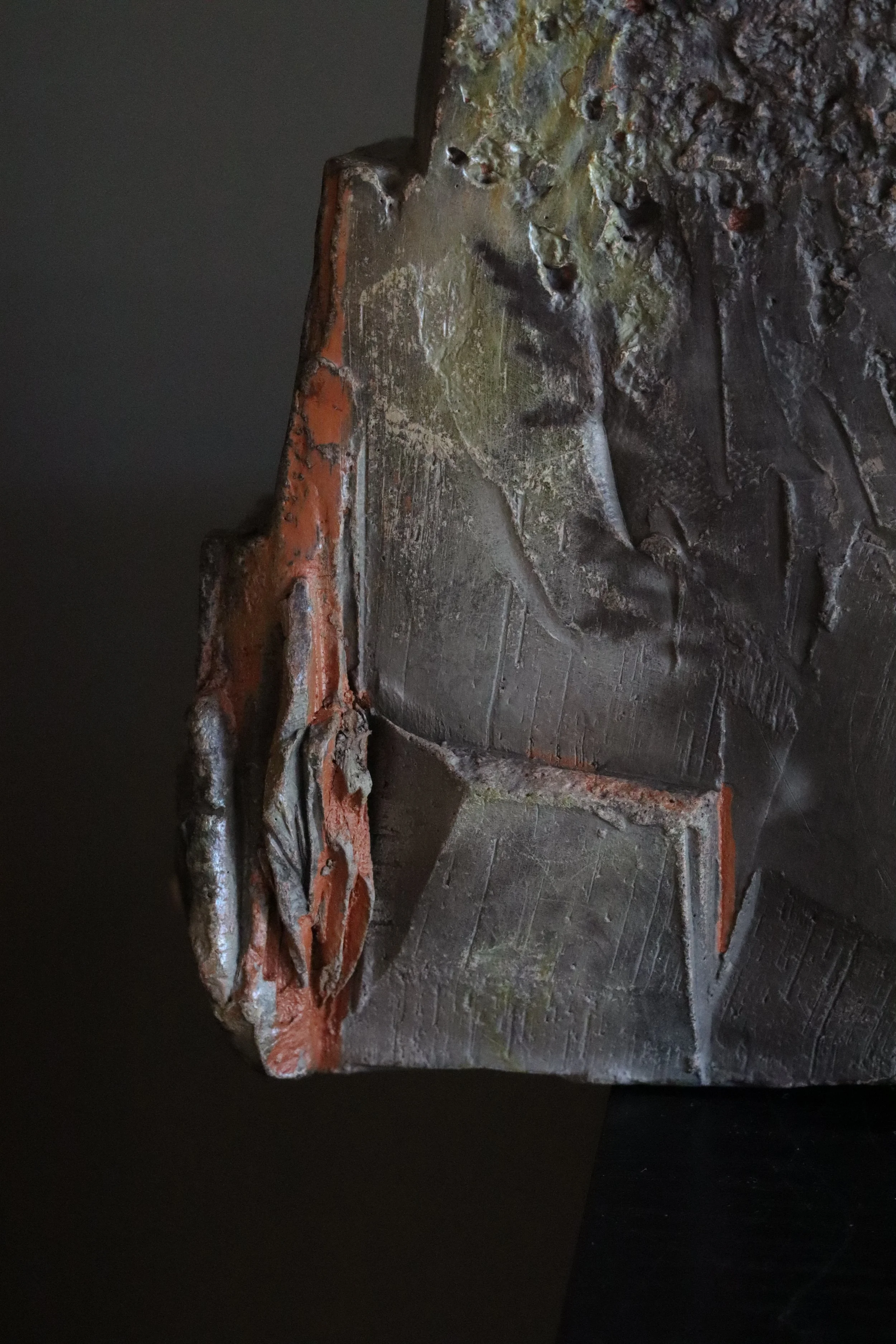
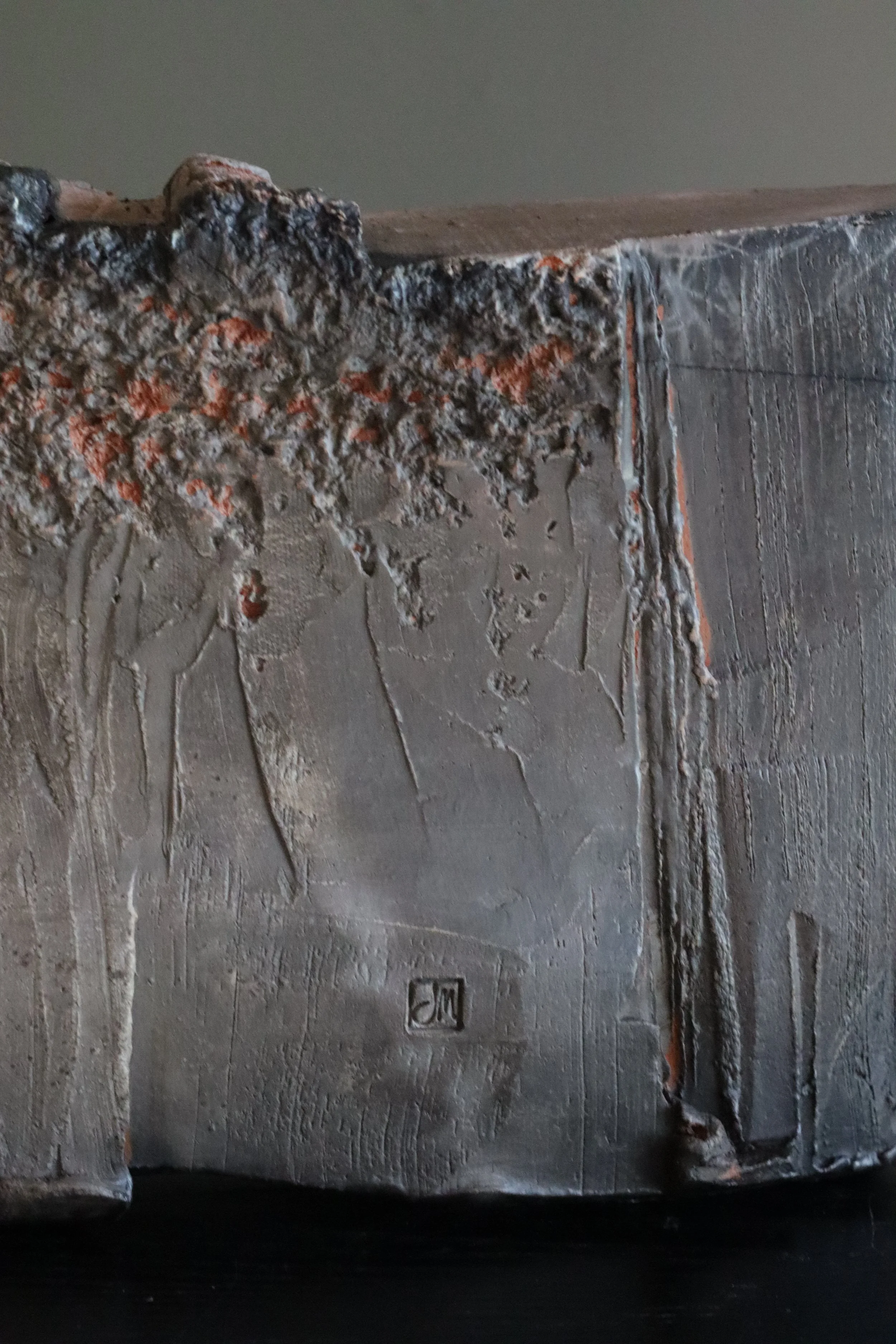
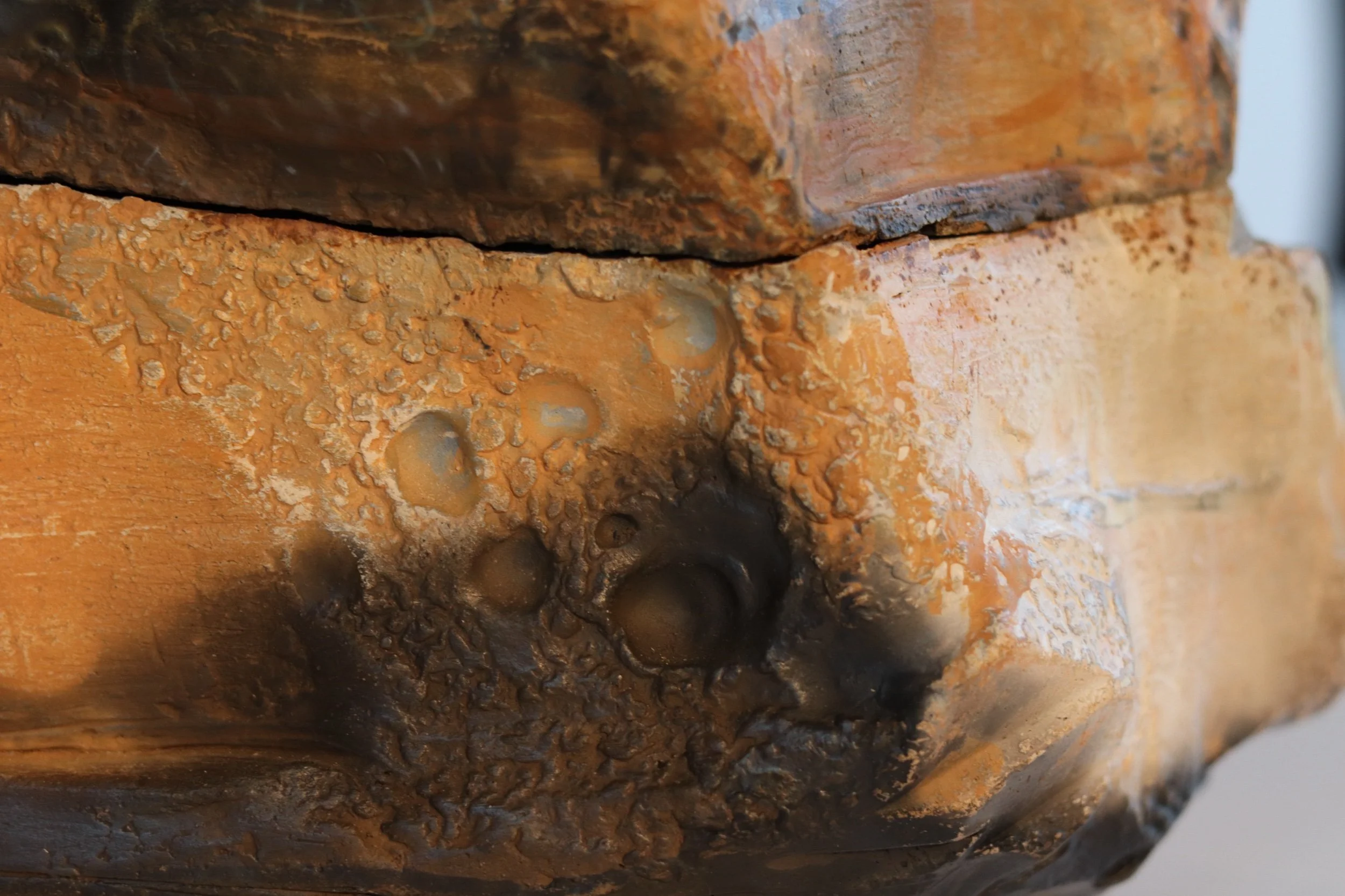
Within its fractured surface are layers of story: Tutchone First Nations knowledge of the land, my lived experience as a settler, and a shared responsibility to care for Turtle Island. The vessel becomes a meeting place between these experiences—not to speak for one another, but to acknowledge the relationships, histories, and responsibilities that connect us.
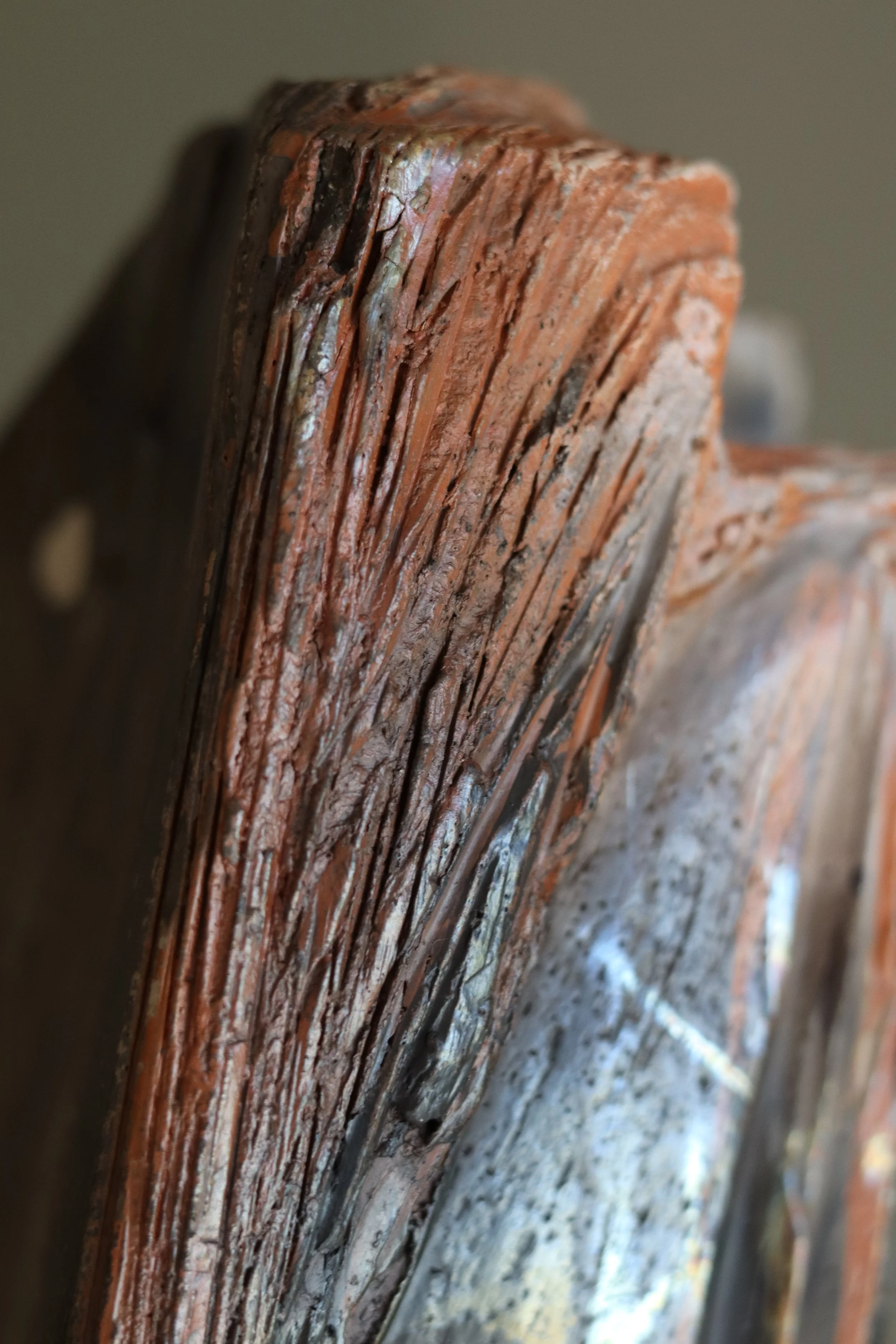
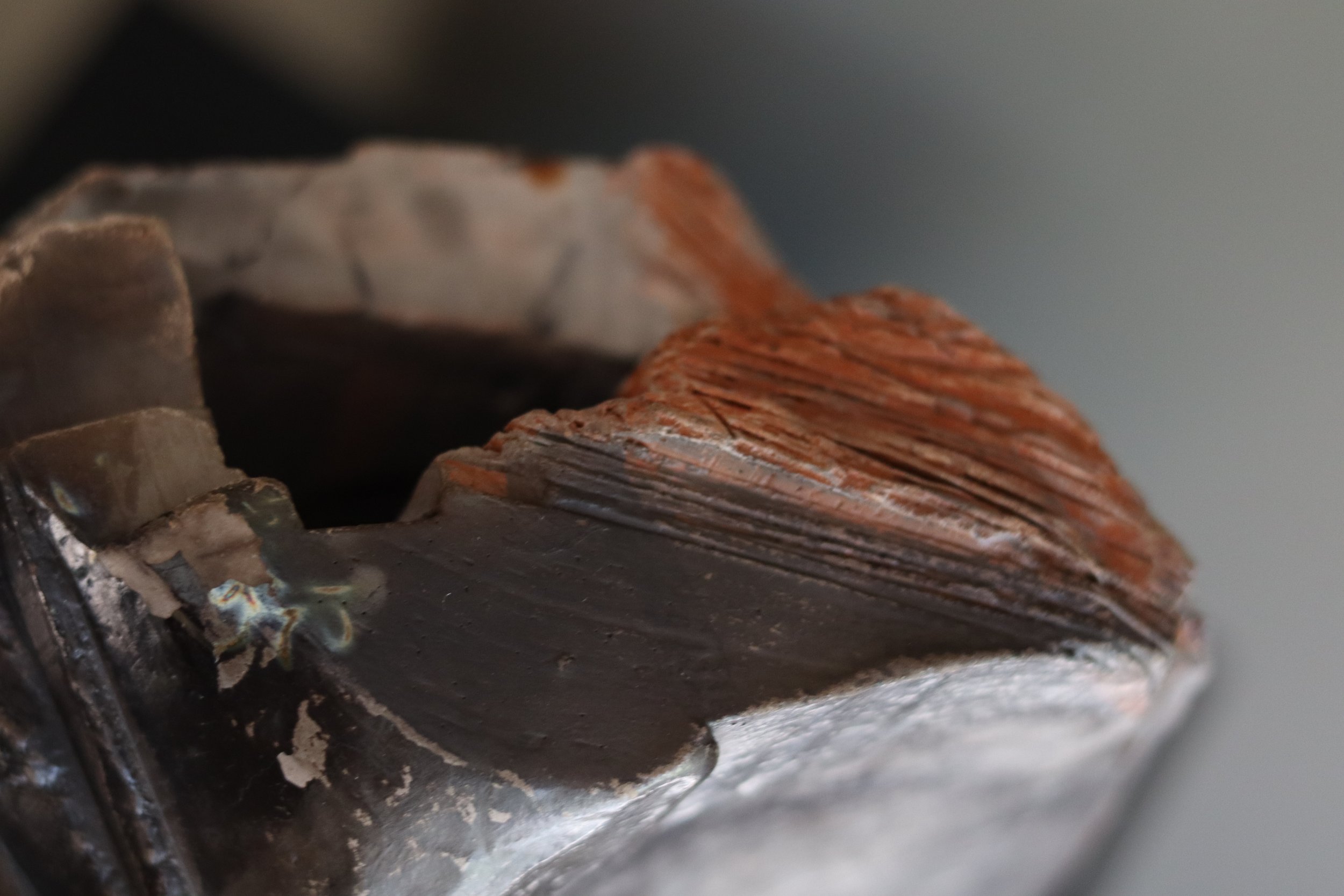
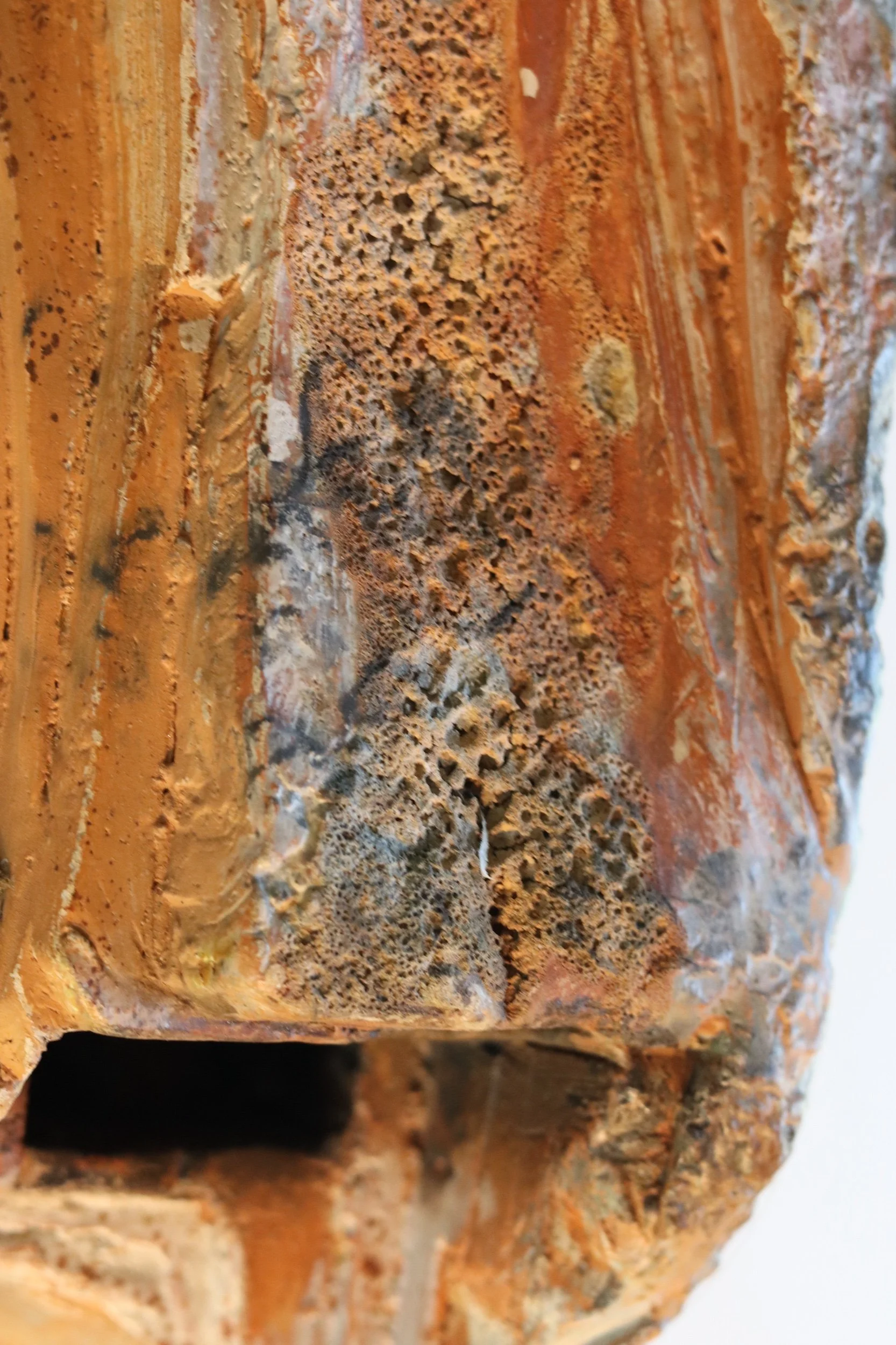
Smoke firing deepens this dialogue, transforming earth, fire, air, and time into a surface that cannot be entirely controlled. The marks left behind become evidence of process, place, and change.
Rocks are not just rocks. They are the Earth’s memory keepers—holding chemistry, history, and the conditions that sustain life.
Through clay, I seek to listen, remember, and participate in acts of reconciliation in action—where art becomes a way of honouring place, relationship, and responsibility.
[e(ART)h]
The Fracture Lines Collection
This collection explores material memory, environmental erosion, and the things we carry through life—both visible and invisible. Fracture Lines grew from a deep connection to the landscapes that have shaped me, and from a growing awareness of how much we hold within ourselves: memory, grief, love, loss, resilience, and hope.
Each hand-carved vessel was created through Kurinuki, a traditional Japanese technique of hollowing solid blocks of clay. Each form slowly excavated into being, echoing geological shifts and the landscapes that have shaped my sense of place.
The surfaces are layered with Terra Sigillatas made from foraged clays, allowing the land itself to become part of the work. Minerals, metals and invasive plants introduced during a 24-hour smoke firing then leave unpredictable marks, embracing chance, transformation, and the alchemy of fire.
These vessels hold more than form. They hold traces of place, process, and our enduring connection to the earth. Their fractures remind us that what breaks us, also shapes us—and that there can be beauty, strength, and tenderness in what we carry forward.
Reconciliation
Smoke-fired Raku clay; Wild foraged clay for Terra Sigillatas; Invasive plant materials; Found and discarded metals and minerals.
22”L x 7”H x 7”W
This vessel carries the memory of place.
Its surface holds wild clays I personally harvested by canoe along the Yukon River, alongside clay gifted to me by Indigenous leaders of The Long Ago People’s Place—an honour I hold with profound gratitude and humility.
Within its fractured surface are layers of story: Tutchone First Nations knowledge of the land, my lived experience as a settler, and a shared responsibility to care for Turtle Island. The vessel becomes a meeting place between these experiences—not to speak for one another, but to acknowledge the relationships, histories, and responsibilities that connect us.
Smoke firing deepens this dialogue, transforming earth, fire, air, and time into a surface that cannot be entirely controlled. The marks left behind become evidence of process, place, and change.
Rocks are not just rocks. They are the Earth’s memory keepers—holding chemistry, history, and the conditions that sustain life.
Through clay, I seek to listen, remember, and participate in acts of reconciliation in action—where art becomes a way of honouring place, relationship, and responsibility.
[e(ART)h]
The Fracture Lines Collection
This collection explores material memory, environmental erosion, and the things we carry through life—both visible and invisible. Fracture Lines grew from a deep connection to the landscapes that have shaped me, and from a growing awareness of how much we hold within ourselves: memory, grief, love, loss, resilience, and hope.
Each hand-carved vessel was created through Kurinuki, a traditional Japanese technique of hollowing solid blocks of clay. Each form slowly excavated into being, echoing geological shifts and the landscapes that have shaped my sense of place.
The surfaces are layered with Terra Sigillatas made from foraged clays, allowing the land itself to become part of the work. Minerals, metals and invasive plants introduced during a 24-hour smoke firing then leave unpredictable marks, embracing chance, transformation, and the alchemy of fire.
These vessels hold more than form. They hold traces of place, process, and our enduring connection to the earth. Their fractures remind us that what breaks us, also shapes us—and that there can be beauty, strength, and tenderness in what we carry forward.